

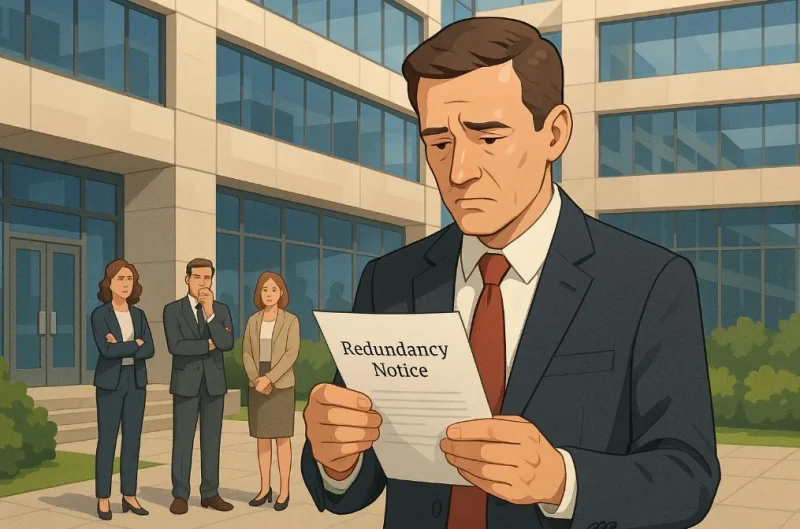
Redundancy pay in the UK provides essential financial support for employees who lose their jobs through no fault of their own. Understanding how it’s calculated helps you plan your finances and ensures transparency.
Statutory redundancy pay depends on your age, length of service, and weekly earnings. Knowing your rights and the legal limits protects your income and ensures fairness.
This article explains eligibility criteria, how redundancy pay is calculated, and how to estimate your entitlement accurately.
What Is Statutory Redundancy Pay?

Statutory redundancy pay is the legal minimum amount employers must provide when dismissing employees due to redundancy. This payout is calculated based on the employee’s length of service, age, and average weekly earnings.
The law applies to employees who have worked for their employer for at least two continuous years. The amount increases with age and years of service, providing greater protection for long-serving or older workers.
Redundancy differs from dismissal for misconduct and is related to the role being no longer required. Your contract may entitle you to more than the statutory amount, but this is at your employer’s discretion.
The aim of redundancy pay is to cushion the financial impact of job loss and help employees transition to new opportunities.
Who Receives It?
To be eligible for statutory redundancy pay, you must meet specific criteria:
- You must be an employee working under a contract of employment.
- You must have worked continuously for at least two years.
- Your redundancy must be genuine, such as a company closure or a reduced need for employees.
Employees on fixed-term contracts of two years or more may also qualify. Apprentices and interns generally aren’t eligible unless they meet full employee criteria.
Zero-hours contract workers may be eligible if they’ve consistently worked regular hours under a structured contract. If you’re dismissed for misconduct or resign voluntarily, you’re not entitled to redundancy pay.
How is Redundancy Pay Calculated?
Redundancy pay is calculated using a formula that includes your age, how long you’ve been employed, and your average weekly earnings.
The process ensures that each year of service contributes to the final payout, with older and long-serving employees receiving more compensation.
Here’s how the formula works:
- 0.5 week’s pay for each full year worked under the age of 22
- 1 week’s pay for each full year between ages 22 and 40
- 1.5 weeks’ pay for each full year aged 41 and over
To calculate your weekly pay, your gross earnings from the 12 weeks before your redundancy notice are averaged. There’s a cap on the amount used per week.
As of 6 April 2025, this cap is £719. The total maximum redundancy payout is £21,570. Employers may offer more but cannot pay less than the statutory minimum.
How Do Age and Length of Service Affect Redundancy Pay?

The amount of redundancy pay you’re entitled to heavily depends on your age at the time of service and how many full years you’ve worked.
Each age bracket has a different multiplier, with older employees receiving more for the same years worked. Length of service is capped at 20 years, even if you’ve been with the employer longer.
How Age Influences the Multiplier?
Employees aged 41 and over receive 1.5 weeks of pay per year, reflecting higher financial obligations and experience.
Service Years Under Age 22
For years worked under 22, the pay is calculated at 0.5 weeks per full year, recognising that younger employees have shorter employment histories.
Middle-Age Bracket Impact (22–40)
Employees in this age range receive 1 week’s pay for every year worked, forming the standard baseline of calculation.
Cap on Countable Service
Even if you’ve worked 25 years, only the most recent 20 years are considered. This ensures parity and affordability in redundancy schemes.
What Are the Rules for Part-Time and Full-Time Workers?
Part-time and full-time employees are equally entitled to statutory redundancy pay, provided they meet the eligibility requirements. The difference lies only in the value of the weekly pay, not the entitlement formula.
Whether you work 15 or 40 hours a week, your redundancy payment is calculated using the same age and service-based method.
Part-Time vs Full-Time Worker Calculation:
| Employment Type | Weekly Hours | Weekly Pay (Example) | Years of Service | Age Bracket | Redundancy Pay Calculation |
| Part-Time | 20 | £300 | 10 | 45 | 10 x 1.5 x £300 = £4,500 |
| Full-Time | 40 | £700 | 10 | 45 | 10 x 1.5 x £700 = £10,500 |
Both are eligible, but payouts reflect actual earnings based on contracted hours. Employers must treat both types fairly under employment law.
Are There Limits on the Maximum Redundancy Pay You Can Receive?

Yes, redundancy pay in the UK has limits defined by statutory regulations. As of April 2025, the maximum weekly pay that can be used for redundancy calculations is £719. Even if you earn more than this per week, your redundancy calculation will only consider £719 as the weekly figure.
The maximum total statutory redundancy payout is capped at £21,570. This cap applies regardless of how many years you’ve worked beyond the 20-year maximum or how much you earn weekly.
These caps ensure fairness across industries and prevent excessive payouts that could financially strain employers. If your contract offers enhanced redundancy terms, you may receive more than the statutory maximum, but this is not guaranteed.
Is Redundancy Pay Taxed in the UK?
Redundancy pay is usually tax-free up to £30,000. This threshold applies to the total termination package, including any redundancy and severance payments. Anything above this amount is subject to income tax.
Here’s what you should know:
- Statutory redundancy pay is always tax-free.
- If your employer pays more than the statutory amount, only the total above £30,000 is taxed.
- Holiday pay and notice pay are considered earnings and are taxed as normal income.
Ensure you review your payout details carefully to understand what’s taxable and what isn’t. Seek advice if your payment exceeds the threshold or includes bonuses.
What Happens if You’re Made Redundant with Less Than Two Years’ Service?

If you’ve been employed for less than two continuous years, you’re not entitled to statutory redundancy pay. However, that doesn’t mean you’ll leave with nothing. Employers are still legally required to follow a fair process and offer notice pay and any accrued holiday pay.
Here’s what you may still receive:
- Notice pay: Based on your contract or statutory notice period
- Holiday pay: For untaken annual leave
- Final wages: Any remaining earnings or commissions
- Expenses: If approved before termination
Some employers may offer an ex-gratia or goodwill payment, especially in larger organisations. If your role is made redundant unfairly or without proper process, you could have grounds for a legal complaint. Always ask for your termination details in writing.
How Can You Use the Government Redundancy Calculator?
The government offers an easy-to-use online redundancy pay calculator to help you estimate your entitlement. This tool considers your age, weekly pay, and length of service to provide a reliable figure. It is especially useful if your employment situation is complex.
To use it effectively:
- Enter your final working date and notice period
- Input your average weekly gross pay
- Include your date of birth and total years of service
The result reflects your statutory redundancy pay. This can help you plan your finances and ensure your employer’s offer is accurate. If in doubt, you can revisit the tool any time during the redundancy process.
Conclusion
Understanding how redundancy pay is calculated in the UK is essential for safeguarding your financial future. From eligibility and age-related rates to tax implications and pay caps, every factor plays a key role in your final payout.
Whether you’re full-time or part-time, knowing the rules ensures you’re not left in the dark. Use official tools to check your entitlement and speak up if things don’t seem right. Being informed is your best protection in times of change.
Frequently Asked Questions
Do you get paid for your notice period separately from redundancy?
Yes, your notice period pay is separate and must be paid alongside your redundancy pay according to your contract or statutory terms.
Can employers offer more than the statutory redundancy pay?
Yes, employers can offer enhanced redundancy packages, but they are not legally required to do so unless stated in your contract.
Is redundancy pay tax-free in the UK?
Redundancy pay is tax-free up to £30,000, but any amount exceeding this limit is subject to income tax.
What happens if my employer can’t afford to pay redundancy?
If an employer cannot pay, you can apply to the government for redundancy pay through the National Insurance Fund.
Can you get redundancy pay after a fixed-term contract ends?
Yes, if your fixed-term contract lasted over two years and is not renewed due to redundancy, you may be eligible.
How quickly should redundancy pay be paid out?
Redundancy pay should be paid on or shortly after your final working day, usually with your final payslip.
Are apprentices and interns entitled to redundancy pay?
Apprentices and interns are only entitled if they meet the criteria of being employees with over two years’ service.