

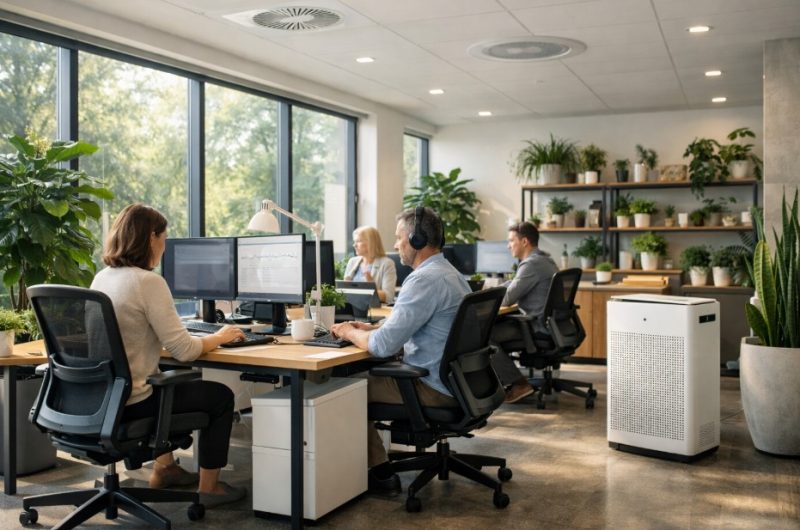
Healthy work environments improve productivity, reduce absenteeism, and stabilize operations. Businesses achieve this through controlled air quality, structured layouts, and consistent operational standards. Improvements must be practical and measurable. Each change should reduce risk or improve performance.
Health-focused environments depend on system-level consistency.
How Businesses Create Healthier Work Environments Through Air Quality and Workplace Design?
Improve Indoor Air Quality Systems
Air quality directly affects respiratory health and cognitive function. Poor air increases fatigue and reduces concentration.
Businesses install systems such as an industrial air purifier to remove airborne particles before they circulate. These systems operate continuously to maintain stable conditions.
Effective air quality management includes:
- Continuous filtration to reduce airborne contaminants
- Balanced airflow to prevent stagnant zones
- Scheduled maintenance to sustain system performance
Cleaner air improves focus and reduces long-term health risks.
Optimize Ventilation and Airflow Design
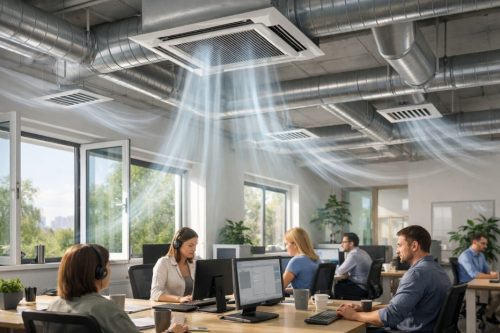
Ventilation controls how air moves through a space. Poor airflow leads to uneven temperature and contaminant buildup.
Modern systems use controlled intake and exhaust points. This ensures fresh air replaces stale air efficiently. Proper airflow design eliminates dead zones and maintains consistent conditions.
Stable ventilation improves comfort and supports consistent performance across work areas.
Use Ergonomic Workspace Design
Ergonomics reduces physical strain. Poor workstation design leads to fatigue and long-term injury.
Adjustable seating, proper desk height, and correct equipment placement are essential. Workstations should support natural posture and minimize repetitive stress.
Ergonomic design improves comfort and reduces disruptions caused by physical discomfort.
Control Noise and Sensory Distractions
Noise affects concentration and stress levels. High-noise environments reduce productivity.
Businesses use acoustic materials and layout adjustments to control sound. Separating noisy operations from focused work areas improves conditions.
Managing sensory input helps employees maintain attention and reduce fatigue.
Maintain Cleanliness and Hygiene Standards
Clean environments reduce contamination and improve safety. Dust and waste increase health risks and equipment wear.
Structured cleaning ensures consistent conditions. Surfaces must be sanitized regularly, and work areas should remain organized.
Consistent hygiene improves both health and operational reliability.
Monitor Air Quality and Behavior Risks
Monitoring systems provide real-time visibility into environmental conditions. Without monitoring, issues remain undetected until performance declines.
Technologies such as vape detectors help identify air quality changes and unauthorized activities. These systems detect particles that may affect workplace conditions.
Monitoring allows:
- Immediate detection of air quality changes
- Faster response to environmental risks
- Enforcement of workplace policies
Real-time data improves control and prevents escalation.
Improve Lighting Conditions

Lighting affects visibility and accuracy. Poor lighting increases errors and causes eye strain.
Workspaces should use evenly distributed lighting. Task-specific lighting is required for detailed work. Consistent brightness reduces strain and improves efficiency.
Proper workspace lighting supports both safety and performance.
Encourage Structured Work Breaks
Continuous work reduces focus and increases fatigue. Scheduled breaks allow recovery.
Breaks should be consistent and built into daily routines. Designated rest areas improve effectiveness.
Regular recovery periods maintain performance throughout the workday.
Integrate Health-Focused Policies
Policies ensure that health standards are followed consistently. Without clear guidelines, improvements are not sustained.
Policies may include:
- Air quality and safety requirements
- Equipment handling standards
- Cleaning and maintenance protocols
Training ensures that employees follow these standards.
Consistent enforcement maintains stable conditions.
Align Health Initiatives with Operations
Health improvements must support business operations. Changes should not disrupt workflow or reduce efficiency.
Decisions should be based on measurable outcomes. Improvements must reduce risk while maintaining productivity.
Balanced implementation ensures long-term success.
Businesses create healthier work environments through structured control of air quality, layout, and operations. Air purification, ventilation, and monitoring systems reduce environmental risks.
Ergonomic design and cleanliness improve daily conditions. Consistent policies and maintenance ensure long-term stability. By focusing on practical improvements, businesses can support both employee well-being and operational performance.