

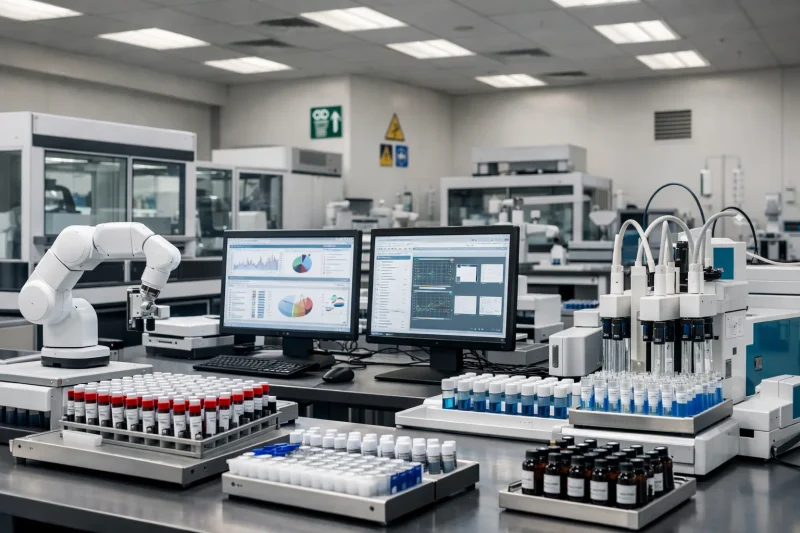
British laboratories are undergoing a quiet revolution. The traditional image of scientists manually conducting tests is rapidly giving way to sophisticated automation systems that improve precision and efficiency.
At the heart of this transformation are advanced titration technologies, which have progressed from simple manual procedures to fully automated processes capable of handling detailed analytical tasks with remarkable accuracy.
The impact of automation on laboratory standards across Britain has been considerable. Modern titrators now integrate seamlessly with laboratory information management systems, creating thorough data trails that satisfy increasingly stringent regulatory requirements.
This shift isn’t just about speed, it marks a fundamental change in how analytical data is generated, processed and stored within scientific environments.
The Evolution of Titration Technology in UK Laboratories
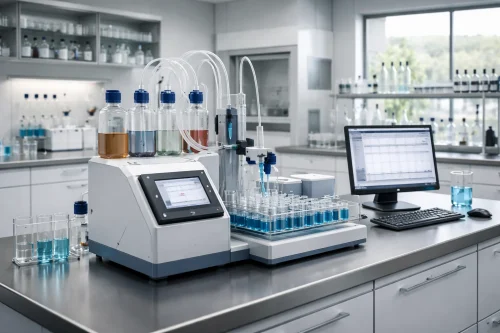
Titration has been a foundation of analytical chemistry in British laboratories for decades. Early methods relied on skilled technicians who would manually add reagents drop by drop while watching for colour changes. This approach, while effective, was slow and susceptible to human error.
The late 20th century saw the introduction of semi-automated titrators in UK labs. These early systems could detect endpoints electronically but still required significant human oversight. Today’s modern titration environment is vastly different.
Visiting Metrohm’s advanced titration instruments reveals fully automated workflows through dedicated modules handling every stage of the process. These systems manage sample preparation, reagent addition, precise endpoint detection and automatic data capture.
This automation removes manual steps where measurement inconsistencies can occur, helping to ensure protocols are followed more consistently.
This level of automation provides laboratories with consistent throughput and can help reduce result variability. Common implementation mistakes include skipping initial setup validation or not adjusting workflows to local requirements.
Laboratory teams should calibrate sample racks and verify software mapping before running multi-sample batches to avoid cross-contamination.
The UK laboratory titration devices market has seen notable growth in recent years, with automated titration solutions becoming more common in laboratories across the country. These technologies are often used to help meet accuracy and regulatory requirements.
Data Integrity and Regulatory Compliance Through Automation
British laboratories face increasingly strict regulatory oversight. Good Manufacturing Practice (GMP) and Good Laboratory Practice (GLP) standards require complete data traceability and integrity.
Manual titration methods can struggle to meet these demands due to their variability and documentation challenges.
Automated titrators address these concerns by creating audit trails. Every step of the analysis is recorded, from sample identification to final results.
This approach supports meeting UK and EU regulatory guidelines, such as those issued under GMP and guidance from authorities including the MHRA. Secure digital records help laboratories demonstrate data integrity during inspections or audits.
Some laboratories have reported improvements in documentation accuracy and batch release times after adopting automated titration systems. Automation can also support compliance with data integrity requirements and enhance operational efficiency.
Measuring ROI from Laboratory Automation Investment
British laboratories investing in titration automation may experience returns through multiple sources. The financial benefits can create a strong business case for modernisation in appropriate settings.
Labour efficiency is a primary area of savings when deploying automated titration systems. With automation, skilled staff can dedicate more time to developing new methods and handling difficult analyses instead of performing repetitive manual steps.
Laboratories can improve staff allocation by shifting workloads away from basic measurement tasks towards higher-priority projects.
Throughput improvements are often reported across the industry, with automated titrators generally offering higher sample processing capacity compared to manual workflows.
These gains can result from the ability to run unattended sequences and reduce manual handling, leading to higher daily output without expanding staff.
Quality control labs using automated titration platforms sometimes report reduced error rates in result documentation and endpoint detection after switching from manual to automated workflows. This improvement may contribute to better batch release efficiency and fewer rejected runs due to process errors.
Integration Challenges with Existing Laboratory Systems
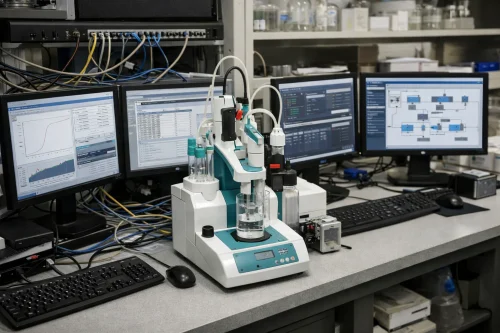
Despite clear benefits, UK laboratories often face hurdles when implementing automated titration. A common challenge involves integrating new titrators with existing Laboratory Information Management Systems (LIMS). Compatibility issues can create data silos that undermine efficiency gains.
Many British laboratories use a staged approach to implementation. They begin with standalone automated titrators before gradually connecting them to broader laboratory systems. This strategy allows staff to become familiar with the new technology while minimising disruption.
Staff training represents another notable challenge. Laboratory technicians accustomed to manual methods often need time to become comfortable with automated workflows. Manufacturers offer training programmes to help staff transition to new systems and workflows.
IT infrastructure requirements can also surprise unprepared laboratories. Automated titrators generate substantial data volumes that may strain existing networks and storage systems. Facilities should ensure their digital infrastructure can handle increased data loads before implementation.
Conclusion
Automated titration now sets the standard for efficient, accurate measurement and trusted data in British laboratories. Direct benefits can include improved workload management, higher result accuracy, and seamless regulatory compliance.
Laboratory managers seeking successful automation should focus on preparatory actions. Assessing digital infrastructure confirms it can handle increased data flow.
Mapping workflows in advance ensures titrators align with LIMS or similar data systems. Organising training for staff ensures those moving from manual to automated titration understand new processes.
As regulatory requirements continue to change, automated titration systems are likely to play an increasingly important role in British laboratories. Their ability to deliver consistent, traceable results aligns with the growing focus on data integrity across scientific disciplines.