

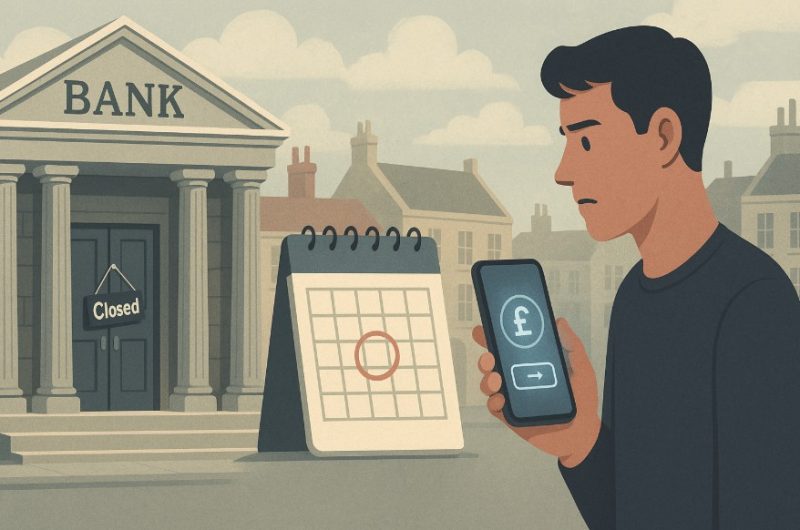
Bank holidays in the UK affect more than just public services, they directly influence how your money moves between accounts.
When sending or receiving payments during these periods, delays are common and often misunderstood. It’s important to understand how various types of bank transfers operate during these non-working days.
Whether you’re handling personal or business transactions, this guide will help you navigate the UK banking landscape during bank holidays and weekends effectively.
What Are Bank Transfers and How Do They Work in the UK?

Bank transfers are a fundamental part of financial life in the UK. They enable you to move money electronically from one bank account to another, either domestically or internationally.
These transfers can be conducted using different systems, each with its own processing time and purpose.
Common UK Bank Transfer Methods
- Faster Payments: Designed for near-instant transactions, most transfers complete within minutes, though they can take up to two hours.
- BACS (Bankers’ Automated Clearing Services): Used for bulk and scheduled payments like salaries or utility bills, BACS transfers usually take up to three working days.
- CHAPS (Clearing House Automated Payment System): Meant for large, same-day payments, often used for house purchases or business transactions, but only during banking hours.
These systems function on working days, Monday to Friday, excluding weekends and bank holidays. Even though online banking gives you access 24/7, actual processing times still depend on whether the banks are open and whether the payment system is active during that time.
Why Are Bank Holidays Important in the UK Banking System?
Bank holidays in the UK are official days off when most businesses, including banks, close operations. These days are recognised by the government and are essential to consider if you rely on timely financial transactions.
Here’s why bank holidays matter in banking:
- No transaction processing: Most banks halt operations, delaying transactions until the next business day.
- Limited access to customer service: Call centres and help desks are typically closed.
- Impact on business cash flow: Payroll, supplier payments, and client invoicing can be disrupted.
- Faster Payments may still queue: Though intended for 24/7 operation, not all banks clear them on holidays.
Typical UK Bank Holidays
- New Year’s Day
- Good Friday
- Easter Monday
- Early May Bank Holiday
- Spring Bank Holiday
- Summer Bank Holiday
- Christmas Day
- Boxing Day
Bank holidays reduce the number of “clearing” days, when money is actually moved between accounts. Understanding these dates ensures better planning for both personal and business finances, preventing frustration caused by failed or delayed transfers.
Do Bank Transfers Work on Bank Holidays and Weekends?

Bank transfers are typically delayed when initiated on weekends or UK bank holidays. While mobile and online banking offer the ability to set up a transaction at any time, that doesn’t mean the money is immediately received. Processing depends on the operational hours of the system used.
For example, BACS and CHAPS do not run on non-working days, including weekends. So, if you submit a payment on a Friday evening or during a bank holiday, it won’t be processed until the next working day, usually Monday or Tuesday after a long weekend.
Faster Payments offers a slight advantage, as some banks support 24/7 processing. However, this isn’t universal. Certain institutions may still delay transfers for security checks or due to internal limitations during holidays.
That’s why even if your banking app shows “sent”, the recipient might not receive funds until normal banking resumes. It’s vital to schedule any urgent transfers in advance or choose financial platforms that confirm 24/7 holiday processing.
How Do Bank Holidays Affect Faster Payments in the UK?
Faster Payments – Quick but Not Always Instant
Faster Payments is often seen as the go-to solution for quick UK transfers, aiming to settle transactions in real-time or within two hours. However, the promise of instant processing has limits, especially during bank holidays.
Availability Depends on the Bank
Although Faster Payments is designed for 24/7 operation, not all participating banks process transactions during holidays. Some banks queue the transfer request until the next business day, causing a delay despite system availability.
Queued Transfers on Holidays
If your bank doesn’t process Faster Payments during holidays, the funds will not be released until the banking system reopens. For instance, a payment made on Christmas Day might not be seen by the recipient until the following working day, even if it looks “sent” on your end.
In summary, Faster Payments offers speed, but only if both the sending and receiving banks fully support real-time processing during holidays. Always check your bank’s policy beforehand to avoid misunderstandings and missed payment deadlines.
Do BACS and CHAPS Payments Process on Bank Holidays?

BACS and CHAPS are well-known systems used for larger and scheduled payments in the UK, but they are also strictly tied to business hours.
These systems do not process on weekends or bank holidays, meaning any payment you submit during these times is put on hold.
BACS transfers follow a three-day cycle. For example:
- Day 1: Payment is submitted
- Day 2: Payment is processed
- Day 3: Payment is credited to the recipient
If any of these days fall on a bank holiday, the cycle is paused, pushing the final payment day forward. This can significantly impact payroll, utility bills, or bulk business payments.
CHAPS, although designed for same-day transfers, only works on weekdays before the cut-off time, usually 5 PM. If a CHAPS payment is submitted on a holiday or after the deadline, it is deferred to the next business day.
For businesses and individuals alike, understanding these limitations is key to avoiding payment delays during holidays.
What Happens If You Send a Bank Transfer on a Bank Holiday?
Sending a bank transfer on a UK bank holiday may seem simple thanks to online banking, but the reality is different. Most payment systems are paused, so your transaction will not be processed immediately.
What typically happens:
- Transfer status shows “pending”: Your bank records the transaction, but it isn’t sent through the payment network.
- No recipient confirmation: The person or business won’t receive the money until the banks reopen.
- False sense of completion: Many apps show a “completed” status even though the transfer is still in queue.
- Customer service may be unavailable: Support teams are often offline, so clarifying transaction delays becomes harder.
For example, if you send rent on a bank holiday expecting same-day processing, you risk a late payment if the recipient doesn’t receive it until the next working day.
Can International Transfers Be Completed During UK Bank Holidays?

International bank transfers involve more complexity than domestic ones, especially around holidays. UK bank holidays often create bottlenecks in the transfer chain, even if your foreign recipient’s bank is open.
These transfers rely on intermediary banks, currency exchanges, and clearing systems, all of which may be affected by UK public holidays.
Even if you send a payment using platforms like Western Union or WorldRemit, the UK-side processing might be delayed due to closures in the domestic banking system.
Another factor is time zone differences. A UK holiday might coincide with a working day abroad, but the transfer won’t start until UK banks reopen. Additionally, foreign exchange rates are not updated on holidays, which can delay currency conversions.
If you’re sending urgent international payments, for tuition, medical fees, or supplier invoices, plan around UK and international holidays to avoid issues. Use services with transparent processing times and consider sending transfers several days in advance.
How Can You Prepare for Bank Holidays to Avoid Transfer Delays?
Bank holidays don’t have to mean financial disruption if you plan ahead. Here are several practical strategies to make sure your money reaches its destination on time:
Best Ways to Prepare
- Submit transfers early: Aim to process payments at least one working day before the holiday.
- Check your bank’s cut-off time: Most UK banks stop processing transfers after 4 PM on weekdays.
- Enable alerts: Use app reminders to be notified of upcoming holidays.
- Avoid BACS or CHAPS for urgent transfers: Use Faster Payments through a digital bank if possible.
- Use third-party payment platforms: Apps like Revolut or Wise can sometimes offer 24/7 processing.
- Plan international payments with extra time: Consider both UK and foreign bank holidays.
By applying these techniques, you reduce the risk of late payments or failed transactions. It’s particularly useful for businesses that need to run payroll or manage vendor payments.
Individuals can also avoid awkward situations such as late rent or missed bill payments. Anticipating delays allows you to stay in control and avoid surprises.
Conclusion
Bank transfers in the UK do not typically process on bank holidays, especially when using BACS or CHAPS. While Faster Payments offers some leeway, it’s not guaranteed across all banks.
Understanding your bank’s holiday schedule, the type of payment system you’re using, and planning in advance are crucial.
If you want to avoid delays, consider making transactions before the holiday starts or using modern digital services that process payments outside standard hours.
Awareness and preparation can save both time and money, and ensure you never miss an important payment deadline due to a public holiday.
FAQs About Do Bank Transfers Work on Bank Holidays
What’s the difference between BACS and Faster Payments?
BACS takes up to three working days, while Faster Payments usually completes within two hours. Faster Payments is also available 24/7 with supported banks.
Are there fees for processing bank transfers on holidays?
Most UK banks do not charge extra fees for holiday transfers. However, some services may include premium charges for same-day or urgent transfers.
Do mobile banking apps allow transfers during bank holidays?
Yes, mobile banking apps allow you to initiate transfers on bank holidays. However, the actual processing happens on the next working day.
How do digital banks handle holiday transfers differently?
Digital banks often process Faster Payments even during holidays. They rely on automated systems that aren’t bound by traditional banking hours.
Are bank holidays the same for all UK banks?
Most UK banks follow the national bank holiday calendar. Some regional holidays may apply depending on the location of the bank.
Can scheduled payments still go through on a bank holiday?
No, scheduled payments set for a bank holiday will be processed the following working day. Always set the payment a day earlier to avoid delays.
What time do UK banks typically stop processing transfers before a holiday?
UK banks usually have a cut-off time around 4 PM on the last working day. Transfers after this time are queued for the next working day.