

A garden office gives you valuable extra workspace without changing your home. But if you’re using it every day, the flooring needs to do more than just look good. It has to cope with office chairs, constant foot traffic, changing temperatures and the occasional muddy pair of shoes.
The right flooring can make your office feel warmer, quieter and more comfortable to work in. It can also save you time on maintenance and help the room stay looking its best for years.
How Do You Choose the Best Flooring for a Garden Office?
Consider How Your Garden Office Is Used Every Day
Before choosing a floor, think about how you actually use the space.
If you’re working from your garden office five days a week, your flooring will face very different demands than a room that’s only used for hobbies now and then. Rolling office chairs, heavy desks and shelving all put pressure on the surface. And if you’re walking back and forth from the garden throughout the day, dirt and moisture are almost guaranteed to come inside.
Comfort matters too. When you’re spending hours at a desk, the feel of the floor underfoot makes more of a difference than you might expect. That’s why it’s worth looking beyond appearance and thinking about insulation, maintenance and long-term durability before making a decision.
Carpet
Carpet remains one of the most popular choices for a garden office, and it’s easy to see why. It creates a warm, comfortable space that feels inviting throughout the year while reducing noise from footsteps, office chairs and everyday activity. And, if you regularly join video calls, carpet can also help soften echoes and make the room sound quieter.
The material you choose is just as important as the colour. Wool carpets are naturally resilient and long-lasting, while many synthetic options offer excellent stain resistance and great value for money. Visiting a specialist Victoria Carpets retailer gives you the chance to compare ranges designed for different levels of daily use and get advice on the best option for your space and budget.
Luxury Vinyl Flooring
Luxury vinyl flooring offers an excellent balance of durability and low maintenance. Its water-resistant surface makes cleaning quick and simple, especially if muddy footwear occasionally finds its way into the office.
One of its biggest advantages is versatility. Modern luxury vinyl can closely replicate the appearance of wood or stone while requiring far less maintenance.
If your chosen product allows it, pairing it with a quality underlay can make the floor feel softer underfoot while helping reduce noise. Always check the manufacturer’s installation guidance to make sure the flooring performs as intended over the long term.
Laminate Flooring
Laminate flooring is a practical option for homeowners who want an attractive finish without stretching the budget. Its scratch-resistant surface copes well with rolling office chairs and daily movement, while click-fit systems make installation straightforward for confident DIY enthusiasts.
Like most laminate products, though, moisture needs managing. Cleaning up spills quickly helps protect the joints and edges from damage. Adding a rug beneath your chair or around your desk can also improve comfort while reducing wear in the areas you use most.
Engineered Wood Flooring
If you like the look of real timber, engineered wood flooring offers a good compromise between appearance and practicality.
Its layered construction makes it more stable than solid wood, helping it cope better with the temperature and humidity changes that can happen in garden buildings. That makes it particularly well-suited to well-insulated garden offices.
Keeping it looking its best doesn’t take much effort. Regular sweeping removes grit that could scratch the surface, while felt pads beneath furniture help protect the finish. Using the cleaning products recommended by the manufacturer will also help maintain the floor for years to come.
Practical Features That Extend Flooring Life
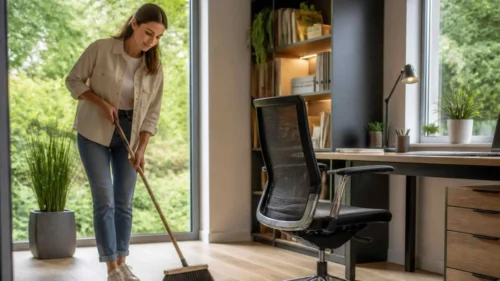
Even the best flooring performs better when it’s properly installed and looked after.
A moisture barrier may be worthwhile if damp could become an issue, while good insulation beneath the floor helps improve both comfort and energy efficiency. Choosing the right underlay can also provide better support and extend the lifespan of many flooring types.
Simple habits make a noticeable difference, too:
- Place a mat outside the entrance to reduce dirt coming indoors.
- Vacuum or sweep regularly to remove grit before it causes scratches.
- Use felt pads beneath furniture to protect the surface.
- Rotate rugs occasionally so wear is spread more evenly.
These small steps take very little time but can help keep your flooring looking newer for longer.
Matching Flooring to Your Budget and Working Style
There’s no single best flooring for every garden office. The right choice depends on how you use the space.
Carpet is ideal if comfort, warmth and quieter surroundings are your priorities. Luxury vinyl flooring suits anyone who wants something durable that’s easy to clean. Laminate offers a practical middle ground for many households, while engineered wood appeals to homeowners looking for a more traditional, natural finish.
It’s also worth thinking long-term. Spending a little more on a durable floor often proves better value than replacing a cheaper option after only a few years of daily use.
Before making your final decision, visit showrooms, take home samples and compare product warranties. Seeing the flooring in your own space can make choosing much easier.
Time to Choose the Right Flooring
Choosing flooring for a garden office isn’t just about appearance. Daily use, comfort, maintenance and durability all play an important role in creating a workspace you’ll enjoy using every day.
By comparing materials carefully and thinking about how you’ll use the room over the coming years, you can choose flooring that stays practical, comfortable and attractive for the long term. It’s an investment that pays off every time you step into your workspace.