

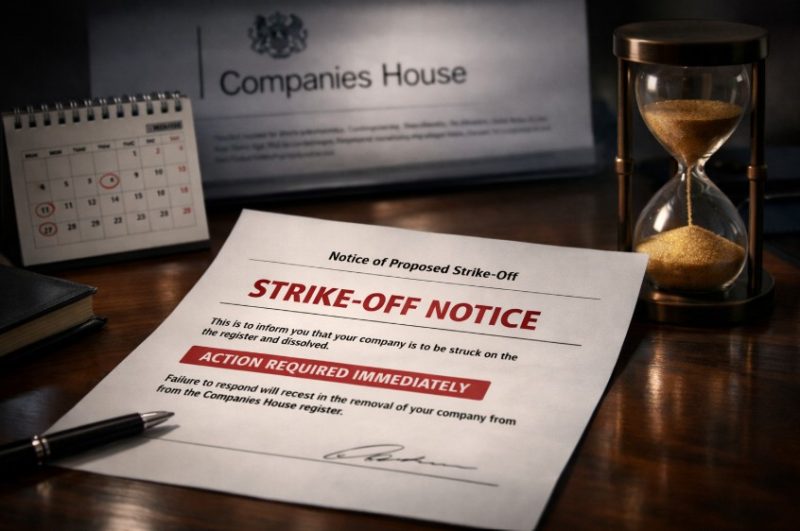
When I first saw a First Gazette notice for compulsory strike-off against my company, I didn’t immediately grasp the implications. It looked like just another formal notice, until I realised it could legally dissolve my business within two months.
This seemingly administrative document carries significant legal weight and can have long-term effects on directors, stakeholders, and creditors.
If you’re in a similar situation, here’s what you need to know upfront:
- It’s an official warning of Companies House’s intention to strike off your company.
- It’s usually issued due to non-compliance (like missing accounts).
- You have up to two months to respond before the company is dissolved.
- Ignoring it can lead to asset loss and personal liability risks.
Understanding this process is crucial. Let’s break it down.
What is a First Gazette Notice for Compulsory Strike-Off?

A First Gazette notice for compulsory strike-off is a public declaration of Companies House’s intent to remove a limited company from the register. This occurs when the registrar has “reasonable cause to believe” that the company is no longer operating in accordance with the Companies Act 2006.
The notice is published in The Gazette, which includes the London, Edinburgh, or Belfast editions, depending on where the company is registered. Once published, it becomes a matter of public record and signifies the start of the dissolution process.
If no valid objections are raised within two months, the company will be struck off the register. From that point, it ceases to exist as a legal entity. All contracts, bank accounts, assets, and liabilities effectively vanish in the eyes of the law.
This process is automatic unless halted, so understanding your position early is key.
Why Would a Company Receive a First Gazette Notice?
A company may receive a First Gazette Notice when Companies House believes it is no longer complying with its legal obligations or appears inactive. This decision is usually based on internal monitoring systems that flag missing filings or inconsistencies in company records.
While the notice is often triggered by administrative oversights, it signals a serious risk of compulsory strike-off if the issues are not resolved promptly.
Common reasons include:
- Failure to file statutory documents, such as annual accounts or confirmation statements
- Perceived dormancy or lack of trading activity, leading to assumptions the business has ceased operations
- No active director in place, which breaches basic company requirements
- Returned or undelivered correspondence sent to the registered office
- Outdated or inaccurate company records, raising transparency and compliance concerns
As compliance consultant Emma Radley notes, a First Gazette Notice is rarely a minor issue, it usually indicates that essential legal responsibilities are being overlooked and need immediate attention.
How Does the Compulsory Strike-Off Process Begin?

The process often starts quietly, long before the public notice is issued. It is driven by Companies House’s belief that the company is no longer active or has failed in its legal duties.
1. Initial Contact from Companies House
Before any public action is taken, Companies House sends two formal letters to the company’s registered office. These letters are not just reminders, they are official inquiries into whether the business is still operational.
If the company fails to respond or update its records, Companies House may interpret the silence as a sign that the company is no longer in business. Unfortunately, many strike-offs begin simply because letters were not opened, especially when companies use outdated or unattended registered addresses.
2. Publication of First Gazette Notice
If no adequate response is received, Companies House moves forward with issuing a First Gazette notice, published in the relevant edition of The Gazette (London, Edinburgh, or Belfast). This marks the first public announcement that the registrar intends to dissolve the company.
The notice includes the company name, number, and a formal warning that the company will be struck off in not less than two months, unless cause is shown. At this stage, the matter becomes visible to creditors, stakeholders, and the public, potentially harming business reputation or triggering creditor objections.
3. Two-Month Objection Window
From the date of publication, there is a two-month window in which any interested party, such as directors, shareholders, creditors, HMRC, or employees, can file an objection or submit evidence to Companies House demonstrating that the company is still active or that there is a valid reason to halt the dissolution.
Objections must be submitted in writing and supported with documentation, such as overdue filings, active bank statements, or proof of ongoing trade. If the registrar accepts the objection, the strike-off process is suspended, and the company remains on the register.
4. Final Notice and Dissolution
If no objection is made, and no corrective action is taken during the objection window, Companies House proceeds to issue a Final Gazette notice, which confirms the company’s removal from the register.
At this point:
- The company ceases to exist as a legal entity.
- All assets become bona vacantia, transferring to the Crown.
- Business accounts are frozen, contracts voided, and legal protections lost.
Process Summary:
| Process Step | Timeline | Implication |
| Warning Letters Sent | Weeks 1–2 | Request for compliance or proof of business activity |
| First Gazette Notice | Week 3 or 4 | Official public intent to strike off the company |
| Objection Period | Up to 2 months | Time to submit filings, objections, or evidence of trading |
| Final Gazette Notice & Closure | After 2 months if no action | Company dissolved; assets transferred to the Crown |
The entire process can happen more quickly than expected, particularly if correspondence is missed or overlooked. For directors, it’s essential to act promptly at the first sign of a strike-off notice, as time and legal options diminish rapidly once the process is in motion.
What Are the Consequences of Ignoring a Gazette Notice?
Ignoring the notice can lead to severe consequences, some of which may not be immediately reversible.
Once dissolved:
- The company loses its legal identity. It cannot enter into contracts, own assets, or take legal action.
- Any remaining bank balances or physical assets become bona vacantia—transferred to the Crown.
- Ongoing trade becomes illegal, and directors may be held personally liable for any new debts or actions.
- The business’s reputation suffers, affecting stakeholder confidence and future ventures.
- Directors may face disqualification proceedings or financial penalties if found negligent.
“We assumed that strike-off was a free way to close the company. But we lost our domain name, customer data, and £4,000 in our business account,” shared a former director during a consultation.
Understanding the irreversible nature of dissolution helps highlight why swift action is critical.
Can You Stop a Compulsory Strike-Off Once It’s Started?

Yes, a compulsory strike-off can be stopped, but only if action is taken quickly and within the limited time available. Once a First Gazette notice is published, the company enters a critical stage where delays can lead to dissolution.
In most cases, stopping the process means fixing the issue that triggered the notice, such as filing overdue accounts or confirmation statements. Directors or creditors may also submit a formal objection to Companies House, supported by evidence that the company is still trading, such as bank statements or contracts.
Clear and timely communication with Companies House is essential. In some situations, professional advice can help ensure the correct steps are followed. Acting promptly can restore compliance and prevent the company from being struck off.
“Most strike-offs occur because directors don’t know how easy it is to reverse,” says insolvency expert Helen Rudge. “It’s a paperwork issue 90% of the time.”
Who Can Object to a Company Being Struck Off?
Objections are a vital legal right for anyone who might be adversely affected by a company’s dissolution. The law allows any interested party to object within the specified two-month window following the publication of the First Gazette notice.
The following parties may object:
- Creditors: To secure debts owed or initiate legal recovery
- Directors or shareholders: To retain control over company assets or business operations
- Employees: Particularly where unpaid wages or pension contributions exist
- HMRC or public authorities: With pending investigations or tax claims
- Contracted suppliers or landlords: Whose agreements are still in effect
The objection must be supported by clear evidence such as invoices, legal notices, or contracts. Submitting vague or unsupported claims may result in dismissal of the objection.
Timeliness is essential: objections should ideally be submitted at least 14 days before the proposed strike-off date, allowing sufficient time for Companies House to review and act.
What Happens to Company Assets During a Strike-Off?

The dissolution of a company through a compulsory strike-off doesn’t just affect its legal standing, it also has direct consequences for all of its remaining assets. Any assets left in the company at the time of strike-off are classified as bona vacantia, a legal term meaning “ownerless goods.”
These assets automatically become the property of the Crown, and recovering them post-dissolution is both complex and costly.
Key types of affected assets:
- Cash in bank accounts: Frozen and absorbed by the Crown if unclaimed
- Physical property and equipment: Can be seized or auctioned off
- Intellectual property: Including brand names, websites, and patents, may be lost or fall into the public domain
- Uncollected debts: Remain unclaimed unless pursued before dissolution
| Asset Type | Post-Dissolution Status |
| Company bank accounts | Frozen; funds transferred to the Crown |
| Vehicles/equipment | Seized unless moved or sold beforehand |
| Trademarks/branding | May become unprotected or re-registered |
| Digital assets | Lost access; potential public takeover |
If you intend to allow your company to be struck off, ensure all assets are extracted or transferred legally before the process completes.
What Should You Do If Your Company Receives a First Gazette Notice?
Receiving a First Gazette notice for compulsory strike-off is a serious legal development, but it’s also a call to action. Ignoring it is not an option, and the decisions you make in the days following receipt can determine the survival or dissolution of your business.
Recommended steps to take immediately:
- Clarify your intentions: Decide if you wish to continue trading or close the business.
- Review Companies House records: Identify exactly what led to the notice—often missed filings or an invalid registered address.
- Act on compliance gaps: Submit overdue accounts or rectify any reported issues.
- Lodge an objection if needed: If the company is active or holds assets, this is essential.
- Contact a professional: Accountants or insolvency advisors can provide clarity and help manage the process efficiently.
“Getting that notice was a wake-up call,” said a business owner I advised. “We had no idea the business was on the verge of being closed just because we missed a filing deadline.”
This period should be treated as a compliance emergency, but with the right actions, it can be fully resolved.
How Long Does the Compulsory Strike-Off Process Take?

The compulsory strike-off process follows a defined timetable and typically takes around 12 to 16 weeks from the first warning to final dissolution. The exact duration can vary depending on how quickly Companies House identifies inactivity or non-compliance and whether the company responds.
Once the process begins, directors are given limited opportunities to act. Failing to respond to letters or notices can accelerate the timeline, especially if Companies House receives confirmation that the business is no longer operating.
Typical Compulsory Strike-Off Timeline
| Stage | What Happens | Approx. Timing |
| Warning letters | Letters sent to the registered office about non-compliance | Weeks 1–2 |
| First Gazette notice | Public notice of intention to strike off | Weeks 3–4 |
| Objection period | Time allowed to file objections or restore compliance | Months 2–3 |
| Final notice | Company dissolved if no action is taken | Month 4 |
If you act before the final stages of the objection period, the strike-off can usually be stopped without court involvement. This is why every communication from Companies House should be treated as urgent, delays significantly increase the risk of automatic dissolution
How Can You Prevent My Company from Receiving a Gazette Notice?
Preventing a strike-off is entirely possible with basic corporate governance and regular engagement with your compliance duties. Many companies fall into strike-off proceedings not due to malice or mismanagement, but simply because of missed reminders or oversight.
Prevention Essentials
- Submit annual accounts and confirmation statements well before deadlines
- Maintain an accurate registered office address and check for correspondence weekly
- Keep at least one appointed director on record at all times
- Inform Companies House of changes to business activity, contact details, or structure
- Use automated filing software or hire an accountant to manage statutory submissions
- Set calendar reminders or use cloud-based compliance tools for filing deadlines
Engaging with these small but vital tasks can completely eliminate the risk of unexpected strike-off notices, and ensure your business remains in good legal standing.
Conclusion
The First Gazette notice for compulsory strike-off may seem like a procedural formality, but it is, in fact, a serious legal action that can dissolve your company and transfer your assets to the Crown. For directors, failing to act can result in frozen accounts, legal complications, and even personal liability.
The good news is, you have options. If you respond promptly, file any overdue documents, or object with evidence, you can suspend or stop the process altogether.
If your company receives such a notice, don’t ignore it. Take control of the situation early, whether that means continuing your business or winding it down properly.
FAQs About First Gazette Notice for Compulsory Strike-Off
What is the difference between voluntary and compulsory strike-off?
Voluntary strike-off is initiated by the company directors when they decide to close the business, while compulsory strike-off is enforced by Companies House due to non-compliance or inactivity.
Can a dissolved company be restored to the Companies House register?
Yes, but it requires a court application and is often a complex and costly process. It’s generally easier to object before the company is dissolved.
What legal obligations do directors have when facing a strike-off?
Directors must ensure all statutory filings are up-to-date and must not continue trading once a strike-off notice is issued. Failure to comply can lead to disqualification and personal liability.
How does a Gazette notice impact company creditors?
Creditors can object to the strike-off to protect their rights. If the company is dissolved, they may need to apply for restoration to pursue outstanding debts.
Are there penalties for ignoring a strike-off notice?
Yes. Ignoring the notice can result in asset forfeiture, frozen bank accounts, and even director disqualification if trading continues post-dissolution.
How does a strike-off affect business contracts and liabilities?
Contracts become void upon dissolution. Outstanding liabilities may transfer to directors if the business continues to trade.
Is it advisable to let a company be struck off to avoid debts?
No. This can be seen as an abuse of the process, and creditors may seek restoration to recover debts. Directors may also face investigations and penalties.