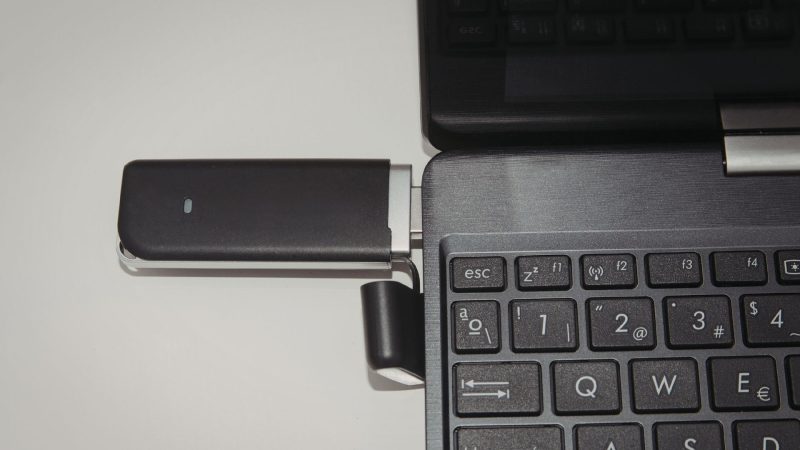
USB devices, often considered innocuous, can serve as gateways for severe cybersecurity incidents in high-stakes industries. In recent years, experts have recognised that removable media represent a critical attack vector for industrial, maritime, and defence environments, putting system integrity and safety at risk.
Understanding the challenge: why USB-based cyber threats matter

Removable media risks across critical sectors
Organisations operating in energy, defence, manufacturing, and maritime sectors rely on Operational Technology (OT) and IT systems that must remain resilient against disruption. Despite strict controls, USB devices routinely cross network boundaries, carrying software patches, vendor files, or documentation.
This necessary data exchange introduces the risk of malware, ransomware, or even targeted espionage. According to research from Honeywell in 2023, 52% of global industrial facilities have encountered USB-borne incidents, highlighting the pervasiveness of the threat.
The evolving nature of USB threats
Attackers increasingly exploit USB devices using advanced malware and techniques such as BadUSB, which manipulates USB firmware. Traditional antivirus solutions may not be equipped to identify such threats, particularly when devices are transferred through air-gapped networks. Past incidents, including the Stuxnet worm that caused significant damage in 2010 via infected USB drives, demonstrate the high stakes involved.
Key takeaways
- Removable media remain a leading entry point for cyber attacks in critical infrastructure and defence.
- Standard endpoint protection may not be sufficient against modern USB-borne threats.
- Multiple sectors, from power plants to ships, face unique operational and compliance challenges when managing USB risk.
Consequences of insufficient USB security
In industrial control environments, a single infected USB drive can halt production lines, corrupt control systems, or trigger physical hazards. For instance, the 2021 Colonial Pipeline incident in the US, which resulted in severe fuel shortages, highlighted how removable media can be abused for ransomware delivery. US-CERT 2021 In maritime or offshore contexts, malware affecting navigation or engine control systems can put entire vessels and crew at risk.
Modern strategies for mitigating USB-based cyber threats
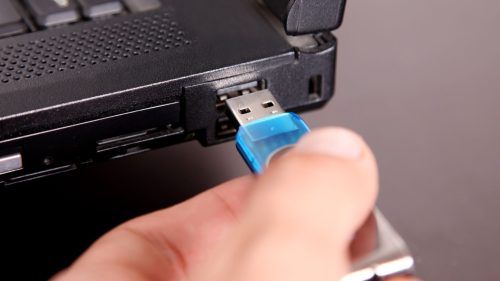
Layered defences: from policy to technology
Effective defence against removable media threats requires a multilayered approach. Leading organisations employ policies that strictly control who can use USB devices, supported by regular workforce training.
However, practical limitations—such as the need for engineers or contractors to transfer updates in the field—make outright bans unrealistic. Thus, the focus has shifted toward risk mitigation through secure processes and robust technology.
Best practices for USB security
- Implement organisation-wide removable media policies that define acceptable use cases, responsibilities, and escalation procedures.
- Adopt physical or logical access controls to ensure only approved USB devices are connected to critical systems.
- Deploy hardware solutions known as “Sheep Dips” or decontamination stations at network boundaries to sanitise media before use on secure assets.
- Enable detailed logging and auditing of all media scans to support compliance and incident response.
- Regularly update detection engines and ensure staff are trained to identify suspicious behaviour related to USB usage.
Sector-specific considerations
Maritime and oil & gas environments present unique challenges due to remote operation and limited internet connectivity. Here, hardware-based scan stations that operate offline are essential, as they do not rely on external networks for protection. Recent guidelines from the International Maritime Organization (IMO, 2021) reinforce the requirement for robust cybersecurity controls on ships and port infrastructure. IMO Cybersecurity Guidance
Key takeaways
- USB bans are rarely practical; secure workflows and hardware controls offer stronger protection.
- Industry regulations increasingly call for proactive scanning and audit of all media entering secure domains.
- Solutions must accommodate operational realities—such as air-gapped sites or mobile field teams.
Case studies: protecting vital infrastructure from USB threats
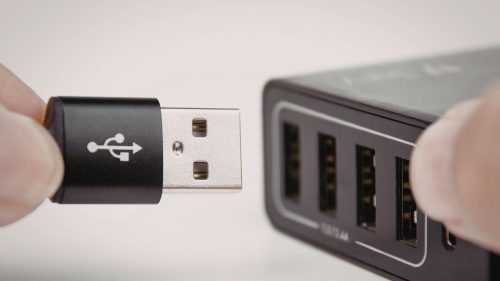
Industrial manufacturing: downtime prevention through hardware scanning
A leading UK-based manufacturer following industry best practices installed dedicated decontamination stations at each entry point to their production floor.
Since deployment, the firm reported zero incidents of malware-induced downtime, compared to two costly shutdowns in the preceding year linked to infected USB devices. This change led to measurable operational savings: an estimated £250,000 in avoided losses, based on industry downtime statistics. UK Business Magazine, 2024
Maritime cybersecurity: a floating environment’s unique needs
Shipping companies frequently face the challenge of updating digital charts and system software while at sea. One multinational fleet implemented touch-screen scanning terminals in bridge and engine control rooms, allowing crew and vendors to check USB drives for threats before authorised use. The company cited increased crew confidence and compliance with IMO cyber rules as direct outcomes.
Defence sector: air-gapped networks and classified systems
In the defence sector, “Sheep Dip” units have become standard for bridging the gap between classified and unclassified domains. For example, a Ministry of Defence contractor introduced scanning kiosks at data delivery points.
All removable media must undergo a multi-engine scan before being permitted on secure workstations, significantly reducing risk of data spillage or malware infiltration.
Key metrics and ROI
| Metric | Before Hardware Implementation | After Hardware Implementation |
| Malware incidents per quarter | 3.2 | 0.5 |
| Downtime (hours/year) | 28 | 3 |
| Total estimated annual cost | £370,000 | £40,000 |
Key takeaways
- Case studies across sectors confirm dramatic reduction in malware incidents and unplanned downtime after deploying scan stations.
- Financial ROI is clear, with six-figure savings realised within twelve months in manufacturing and infrastructure settings.
Industry adaptation: overcoming challenges and ensuring resilience

Customising solutions for sector and locale
No two industries share the same risk profile or operational environment. Critical national infrastructure sites, such as power stations, may require fixed scan points at site entry, while maritime and oil platforms benefit from portable or wall-mounted units capable of standing up to harsh conditions.
Defence settings necessitate devices that can enforce air-gap integrity while accommodating complex classification protocols. Adaptability and compliance with sectoral standards such as IEC 62443 (industrial systems) or Cyber Essentials (UK government framework, updated 2024) are fundamental for success.
Workforce experience: usability and trust
Recent studies show that user-centric design dramatically increases policy compliance. For example, scan and go devices featuring intuitive touchscreens and fast response times are favoured in high-pressure environments, enabling staff and contractors to fulfil their work without extensive training. This reduces errors, secures device acceptance, and minimises operational delays.
Enabling compliance and traceability
Automated logging and reporting, essential for audit readiness, have become pivotal in passing regulatory inspections. Implementing transparent processes reassures both regulators and business stakeholders that removable media controls meet national and sector-specific standards. Regular internal security assessments further ensure these controls are kept up to date.
Sector spotlight: maritime cyber defences
International fleets are turning to dedicated scanning terminals as a standard measure to safeguard engine management, navigation, and cargo systems from digital threats. The scoping of projects now regularly includes references to industry resources, such as guidance on cybersecurity for cargo ships, to support resilient and compliant vessel operations worldwide.
Next steps: driving awareness and elevating protection
Building a proactive security culture in high-risk industries
Cyber resilience depends not only on technology but also on a pervasive security-conscious culture. Ongoing training, actionable incident response plans, and scenario-based testing sharpen organisational readiness to remediate evolving threats.
Executive commitment to investing in holistic USB security—encompassing technology, people, and policy—cements the foundation for continuous improvement.
As cyber incidents grow in frequency and impact, now is the time for leaders in critical and high-security industries to review their removable media protocols and technology.
For guidance on tailoring effective controls, or to explore the latest advancements in cybersecurity for cargo ships and other specialised sectors, consult dedicated expert resources. Strengthening your USB defences today will ensure operational continuity and peace of mind in an increasingly interconnected world.