

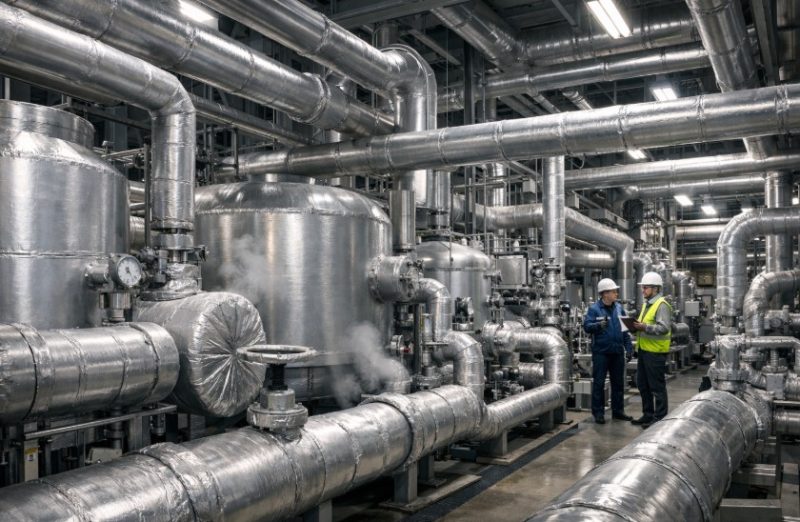
If you’re running an industrial operation, you’re always looking for ways to cut costs and strengthen performance. Insulation may not be the most visible investment, but it’s one of the most effective. Applied correctly, it delivers measurable returns across energy savings, safety, compliance, and long-term durability. Here’s where insulation provides the greatest return on investment.
1. Energy Efficiency Gains
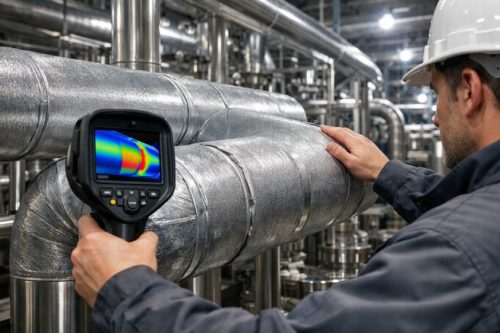
Heat loss from uninsulated pipes, ducts, or tanks translates directly into wasted money. In facilities that run continuously, the impact is substantial. Insulation preserves thermal performance, easing the demand on heating and cooling systems. The outcome is lower energy consumption and faster financial recovery.
For complex pipework or external refrigeration systems, advanced solutions such as polyisocyanurate (PIR) insulation are particularly effective. PIR is rigid, durable, and engineered for industrial use.
Trusted providers like thermal-clad.co.uk supply preformed sections that streamline installation while maximising efficiency. Choosing such targeted solutions helps you address energy loss with precision and confidence.
Consider a food processing plant where refrigeration systems operate around the clock. Without insulation, energy losses can account for thousands of pounds annually. Installing PIR insulation reduces losses quickly, with efficiency gains that continue to build over time.
2. Equipment Protection
Insulation is also a safeguard for your machinery. Excessive heat can degrade seals, damage sensitive components, and shorten equipment lifespan. By stabilising operating conditions, insulation reduces thermal stress and extends the durability of critical systems.
The financial benefits are clear. With fewer breakdowns, you avoid costly emergency repairs and minimise downtime. Over time, these savings strengthen your bottom line.
Take chemical processing facilities as an example. Equipment exposed to fluctuating temperatures often requires frequent maintenance. Insulation stabilises conditions, reducing wear and extending service intervals. That translates into fewer interruptions and more predictable operating costs.
3. Workplace Safety
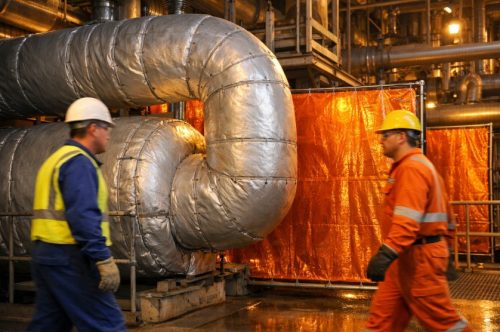
Exposed hot surfaces and uncontrolled temperatures create risks for your workforce. Proper insulation reduces those hazards, creating a safer environment across industrial sites.
The benefits extend beyond protection, as insulation also delivers measurable outcomes:
- Lower insurance premiums: Reduced risk leads to more favourable coverage terms.
- Reduced liability: Fewer incidents mean fewer claims and legal costs.
- Fewer lost workdays: A safer environment keeps your team on the job.
In power generation plants, for instance, insulated steam lines reduce surface temperatures dramatically. Workers can move safely around equipment, lowering the risk of accidents. By reducing hazards and improving morale, insulation safeguards both your workforce and your operational continuity.
4. Regulatory Compliance
Industrial facilities operate under strict regulations governing energy use, emissions, and worker safety. Insulation helps you meet these requirements proactively. It ensures thermal performance standards are achieved and environmental impact is reduced.
The cost of non-compliance can be severe, ranging from fines to enforced shutdowns. By investing in insulation, you demonstrate responsibility to regulators and stakeholders alike.
For example, in pharmaceutical manufacturing, maintaining precise temperature control is not just a matter of efficiency but a regulatory requirement. Insulation ensures compliance, protecting both product integrity and company reputation.
5. Sustainability and Reputation
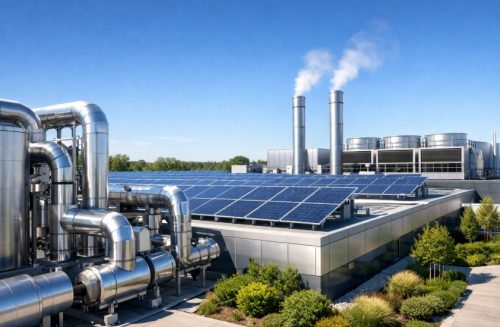
Sustainability is no longer optional. It has become a business imperative. Insulation reduces energy demand, lowering carbon emissions in the process. This supports environmental goals while strengthening your corporate reputation.
Customers and investors increasingly value companies that act responsibly. By choosing durable, high-efficiency materials, you build trust and position your organisation as a leader in sustainable practice.
Consider large distribution centres. By insulating HVAC systems, operators cut emissions significantly. This reduces operating costs while demonstrating commitment to environmental responsibility, which resonates with clients and investors.
6. Operational Flexibility
Many industrial processes depend on precise temperature control.
Insulation helps maintain stable conditions, and its impact is clear in several industries:
- Breweries: Insulated tanks stabilise fermentation, ensuring consistent flavour and reducing spoilage.
- Semiconductor manufacturing: Precise thermal control protects yields and maintains product reliability.
- Refrigeration systems: Insulation supports consistent performance across seasonal changes, preventing costly interruptions.
Reliable systems also give you flexibility. You can scale operations, adjust workflows, and meet customer expectations without concern for thermal fluctuations. This adaptability is especially valuable in industries where precision and reliability define success.
7. Long-Term Financial Impact
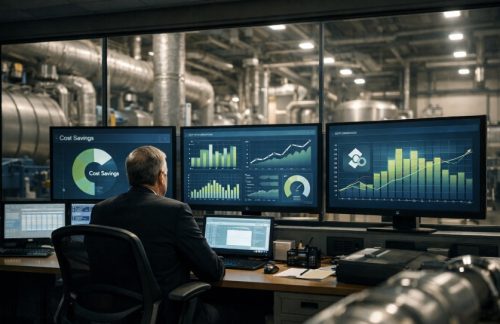
Insulation is a long-term investment. Once installed, it requires minimal maintenance while delivering ongoing savings. Over several years, the return compounds, reinforcing financial stability.
When combined with other efficiency measures, insulation amplifies results. Stronger margins, improved performance, and reduced risk all contribute to lasting value.
In large-scale manufacturing, insulation projects often pay for themselves multiple times over their lifespan. The cumulative savings from reduced energy use, lower maintenance, and improved safety create a compelling financial case.
Conclusion
Industrial insulation delivers measurable returns across energy efficiency, equipment protection, safety, compliance, and sustainability. It’s a strategic choice that supports both immediate savings and long-term resilience.
If your systems have not been reviewed in some time, an assessment may reveal opportunities for improvement. Address areas of heat loss, safety concerns, or inefficiencies with care. The benefits are clear, and the returns are enduring.