


Digital tools are reshaping how we teach and learn. From virtual classrooms to adaptive learning systems, these products create new possibilities for engagement and administration. Schools, universities, and edtech businesses increasingly lack the in-house capacity to build these complex platforms.
They are turning to external technical partners for expertise. This overview examines established companies that develop educational software, serving both the active UK market and global clients.
Educational Software Market Overview
The UK stands as a vibrant edtech hub, driven by strong academic institutions and a tech-savvy population. Demand for digital learning solutions, however, is truly worldwide. Creating such software requires a rare mix of pedagogical understanding, technical skill, and scalable architecture. Most organizations find building this capability internally too slow and expensive. They partner with specialists instead.
The educational sector itself is transforming. We think the old models are getting a serious shake-up. It’s not just about putting lectures online anymore.
Major shifts guiding development include:
- Growth of online and hybrid learning models;
- Increasing demand for scalable digital education platforms;
- Higher expectations around data security and reliability.
These changes mean you need a developer who gets both technology and the unique pressures of educational environments. The wrong choice here can literally disrupt a semester.
Top Educational Software Development Companies
The firms listed here were selected for their proven track records with educational institutions and products. We looked for real experience building student or teacher-facing platforms, not just generic web apps. Their work demonstrates an understanding of the sector’s specific needs.
CHI Software

CHI Software, providing full-cycle edtech software development, creates digital products for education, from custom learning management systems to interactive educational applications. They work with various platform formats, supporting UK and international clients through the entire product journey.
Their process often begins with research and consulting, tackling the unique workflow challenges found in academia. Their approach is built for solutions that must be both sophisticated and universally usable.
They are useful for institutions that have a clear vision but need a technical team to execute it reliably. The firm can translate educational objectives into functional software.
Their key strengths for educational organizations are:
- Full-cycle development of education-focused software solutions;
- Experience working with complex, user-facing platforms;
- Flexible collaboration models for long-term projects.
This makes them a solid pick for ambitious, large-scale digital transformation in education. They handle the complexity so the client can focus on pedagogy.
10Pearls

10Pearls develops complex digital products with a sharp focus on user experience and scalability. They build secure, custom edtech solutions, often incorporating modern elements like Artificial Intelligence. Their work for global organizations means they are accustomed to diverse requirements and high standards for deployment.
The company’s emphasis is on creating software that is not only powerful but also intuitive and accessible for all users, which is non-negotiable in educational settings.
They build for growth and real-world use. Maybe that’s why their projects stick around.
Their services cater to education through:
- Custom software development for education-related products;
- Strong attention to usability and accessibility;
- Experience delivering projects for global organizations.
This focus ensures the final product actually gets used by students and teachers. It’s a practical difference.
Leobit
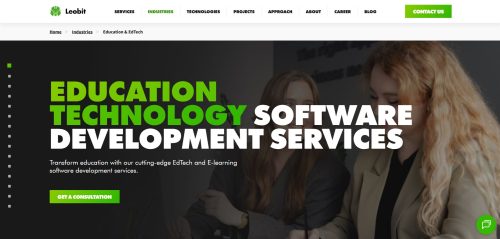
Leobit specializes in the development and ongoing support of existing educational platforms. They are a go-to partner for enterprises and institutions that need technical maintenance, updates, or significant improvements to their current software.
Their model promotes long-term collaboration through dedicated teams who become deeply familiar with a client’s system. This is critical for educational software, which cannot afford extended downtime or unstable updates during an academic term.
They provide continuity. Honestly, for a school, that’s as important as the initial build.
They offer value through:
- Development and improvement of existing education platforms;
- Dedicated teams for ongoing software support;
- Emphasis on system stability and maintainability.
This approach turns a development partner into a long-term operational asset. It just makes sense for institutions.
Cleveroad
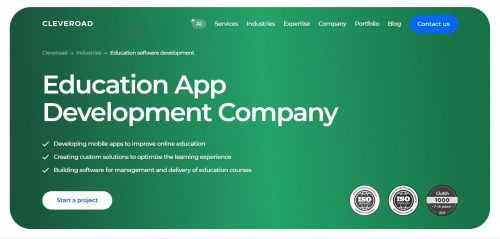
Cleveroad focuses on building custom learning and training platforms, delivering both web and mobile solutions. Their experience covers e-learning systems, LMS platforms, and interactive educational applications. They employ user-centered design principles to ensure their products meet actual learning and teaching workflows.
This practical focus helps bridge the gap between a cool technical demo and a tool that gets adopted in a classroom or corporate training environment.
They build for the person clicking through the lessons. According to our analysts, that user-first mindset is what separates good edtech from the rest.
Their work typically involves:
- Development of custom learning and training platforms;
- Mobile and web solutions for education use cases;
- Practical experience with user-centered product design.
This results in software that feels built for its purpose, not just adapted from another industry. A key detail.
DBB Software
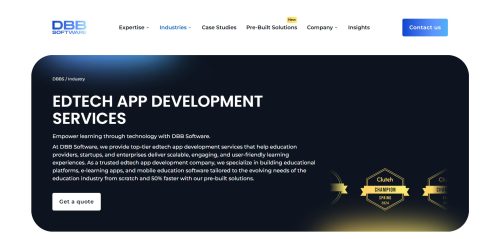
DBB Software constructs custom-built software for specific education and training needs. They employ an agile, iterative development approach, allowing for rapid adaptation to feedback from educators and learners.
Their focus is on aligning technology with genuine learning workflows, ensuring the software supports rather than hinders the educational process. This methodology is ideal for projects where requirements might evolve as the product is tested in real instructional settings.
They move fast and adjust course. In a sector full of opinions, that agility is a lifesaver.
Their services are defined by:
- Custom-built software for education and training needs;
- Agile delivery and iterative development approach;
- Focus on aligning technology with real learning workflows.
This creates a collaborative build process, which often leads to a more effective final product. Less guesswork, more results.
Final Thoughts
The choice of a development partner is critical, directly impacting the success and adoption of your educational tool. It’s important to look beyond a flashy portfolio and assess a firm’s understanding of pedagogical challenges and institutional constraints. A good partner solves for the end user, whether a student or a teacher, within real world limits of budgets and timelines.
This review serves as a starting point for that evaluation. The next step is to engage in detailed conversations with shortlisted firms, asking them tough questions about past projects and their approach to the unique hurdles of the education sector.