

Business events work best when every invited guest arrives, moves through the venue and joins each session with ease. For participants who use wheelchairs, gaps in access turn a promising event into a source of stress. Accessibility needs attention from the first idea through to the last guest leaving the building.
When organisers treat inclusion as a core standard, attendance increases, discussions gain more perspectives and reputations grow stronger. Accessibility also supports legal compliance across the UK, reducing risk around discrimination claims or complaints. Good practice in this area protects both people and organisations.
Why Accessibility Matters for UK Business Events?
UK equality law expects businesses to remove barriers for disabled people wherever reasonable, through reasonable adjustments at work. Business events sit within this expectation. Event hosts have a duty to think about access in advance and to avoid arrangements which disadvantage guests with mobility needs.
Legal compliance is only one reason for strong access planning. Inclusion supports better networking, smoother workshops and more balanced panels.
When wheelchair users move between sessions with minimal effort, attention stays on content rather than obstacles. Colleagues notice this standard and associate the host organisation with professionalism and respect.
How Does Planning Business Events with Accessibility in Mind Improve Attendee Experience?
Early Planning and Clear Standards

Accessibility works best when organisers set clear aims before any venue search or supplier booking. A short written access brief keeps everyone aligned. This document states who the audience includes, which mobility needs organisers expect and what level of support the event promises.
Teams who want a structured event plan can use making your event accessible checklists that cover pre-event administration, venue layout and social elements.
Budgets require honest review. Step-free routes, accessible toilets, trained staff and adapted transport all need funding. When accessibility sits in the budget from the start, the team avoids last-minute compromises.
Assigning one person as access lead helps maintain focus. That person coordinates with venue staff, transport providers and speakers so each group understands their role.
Venue Selection and Physical Access
Venue choice often decides whether a business event works for wheelchair users. Online descriptions rarely show the full picture, so site visits stay important. During each visit, organisers check routes from pavement to reception, assess lifts, and try doors and toilets.
Entrance routes need smooth surfaces, minimal gradients and no unexpected steps. Doors require enough width for standard and larger wheelchairs, with handles at reachable height. Reception desks benefit from a lower section so wheelchair users speak with staff face to face.
Inside the venue, corridors should allow turning space and meeting rooms need clear routes between seating areas. Organisers need to understand how layouts relate to building regulations wheelchair access, so physical access meets both comfort and legal standards.
Accessible toilets on every floor used for sessions remove long detours and queues. Lifts need maintenance records, back-up plans for faults and controls at reachable height. Emergency exits must work for wheelchair users as well, not only for ambulant guests. A venue which satisfies these checks supports safe participation throughout the day.
Transport Solutions for Attendees with Mobility Requirements
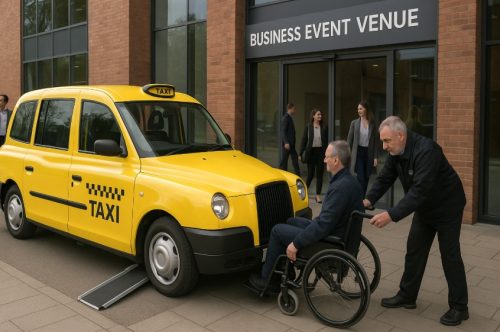
Even when a venue delivers strong physical access, poor transport arrangements undo much of that work. Attendees who rely on wheelchairs often face gaps in public transport, busy pavements and taxi shortages at peak hours. Early planning reduces these barriers.
Organisers contact local providers in advance, confirm availability of wheelchair accessible vehicles and agree procedures for pick-up and drop-off.
Many event teams also share details for specialist fleets and invite guests to pre-book. Business hosts who need a consistent source of adapted vehicles often explore Cab Direct’s wheelchair accessible taxi range so arrival and departure run on predictable schedules.
Pre-event information should explain where vehicles stop, how far each entrance sits from the kerb and which routes avoid steep gradients. Clear wayfinding from station or car park to reception supports guests who travel independently as well as those who use booked transport. When attendees know what to expect, anxiety reduces and timings stay on track.
Accessible Communications and Registration
Digital invitations and sign-up forms shape first impressions. If these tools exclude disabled guests, many people will never reach the venue stage. Online systems need structure which works with screen readers, keyboard navigation and high-contrast settings. Short sentences, descriptive link text and simple layouts support everyone, not only people with access needs.
Registration forms should include a clear question about access requirements, framed in respectful language. Examples of support help respondents feel safe to share detail. The team then responds promptly, confirms arrangements and records them in the running order. When access requests receive acknowledgement, trust grows.
Event websites and joining instructions also play a key role. Pages describing the venue include practical facts: step-free routes, lift locations, toilet details, parking options and transport links.
Maps highlight accessible entrances rather than only the grand front door. Contact details for an access coordinator provide a direct route for follow-up questions.
Signage, Documents and Room Layout
On the day, signage should guide guests through the building without confusion. Large, high-contrast lettering and clear symbols support many visitors at once.
Signs need placement where wheelchair users see them easily, not only high on walls. Event teams who follow accessible signage standards keep routes predictable for all guests. Angled stands or displays at different heights help with this.
Printed materials such as agendas, handouts and name badges require accessible design as well. Simple fonts, good colour contrast and adequate text size support readers with visual impairments. Digital versions in accessible formats serve guests who prefer screen readers or zoom tools.
Room layouts influence how included wheelchair users feel during sessions. Spaces for wheelchairs belong among other seats rather than at the back or in a corner.
Presenters and facilitators need visible lines of sight to everyone. Raised stages require safe platform lifts or alternative presentation positions. Breakout areas and networking spaces benefit from clear routes between tables, without narrow gaps or trip hazards.
Staff Training and Onsite Support

Even with strong infrastructure, people make the difference on the day. Staff who understand access basics respond faster and with more confidence. Training sessions before the event walk through step-free routes, lift controls, toilet locations and quiet spaces. Role-play around guiding someone in a wheelchair or responding to a complaint helps staff react respectfully under pressure.
Some team members act as visible access contacts. These staff wear clear badges or coloured lanyards and remain near entrances, reception desks and busy corridors.
When a guest needs directions, support with doors or help during an evacuation, a trained person is close. Coordination with venue security and first-aid teams ensures consistent responses across all staff groups.
Emergency planning deserves special focus. Written personal emergency evacuation procedures for disabled people include routes without stairs, refuge points and procedures for evacuation chairs where needed. Teams practise these steps during drills, not only on paper. Guests gain confidence when organisers explain procedures briefly at the start of the event.
Feedback and Continuous Improvement
Accessibility improves over time when organisers collect feedback and act on it. Post-event surveys include specific questions about transport, venue access, signage, communication and staff support. Responses from wheelchair users receive careful review, since these guests often notice problems others miss.
Debrief meetings after each event examine what worked well and what needs revision. Perhaps taxi pick-up points sat too far from the entrance, or one lift created a bottleneck between sessions. Recording lessons in an internal checklist avoids repeating the same issues at future events. Sharing insights with venue partners and suppliers also raises standards across multiple events.
Accessible business events start with clear standards, solid venues and reliable transport, then continue through good signage and trained staff. When wheelchair users move through each stage with ease, people focus on ideas, not obstacles. Hosts who treat accessibility as a core event value build trust, loyalty and stronger professional relationships.