

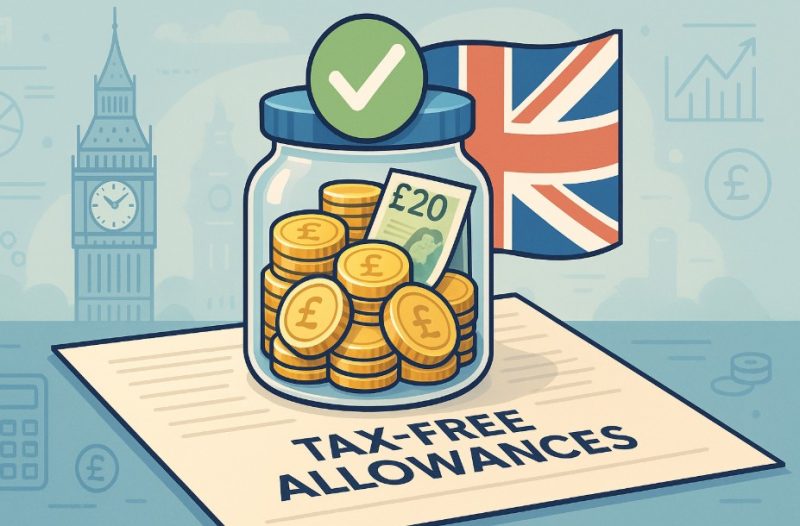
In the UK, many people are surprised to learn that they can earn interest on their savings without paying any tax.
Thanks to allowances like the Personal Savings Allowance, the Starting Rate for Savings, and the Personal Allowance, most savers won’t pay tax unless they exceed specific limits. These thresholds vary based on your total income and tax band.
Whether you’re saving with a bank, credit union, or building society, it’s essential to understand how much of your savings income is tax-free and how to ensure you’re making the most of your exemptions under the UK tax rules.
What Is the Personal Savings Allowance?
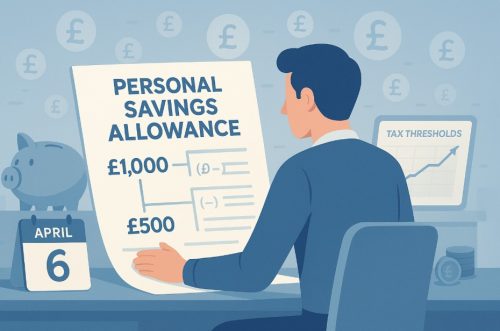
The Personal Savings Allowance (PSA) allows UK taxpayers to earn interest on their savings without paying any tax, but the limit depends on which income tax band you fall into.
If you’re a basic rate taxpayer, you can earn up to £1,000 of savings interest tax-free each tax year. Higher rate taxpayers get a reduced allowance of £500, while additional rate taxpayers receive no savings allowance.
This allowance covers interest earned from a wide variety of sources, including bank and building society accounts, peer-to-peer lending, and corporate bonds. However, interest from tax-exempt accounts like ISAs does not count toward this limit.
The PSA resets every tax year, starting from 6 April to 5 April the following year. It provides a straightforward way to encourage saving without immediate tax consequences for most individuals, especially those within the lower income bands.
How Does Savings Interest Get Taxed?
Savings interest in the UK is treated as income and taxed based on your total annual income level. Alongside your Personal Savings Allowance, you may also benefit from the Personal Allowance and the Starting Rate for Savings. These layers work together to potentially increase your tax-free threshold.
- Personal Allowance: Everyone in the UK can earn up to £12,570 tax-free, covering all income types, including savings, wages, and pensions.
- Starting Rate for Savings: If your non-savings income (like salary or pension) is below £17,570, you may also qualify for up to £5,000 of tax-free savings interest.
- Personal Savings Allowance: Adds an additional £1,000 or £500 (depending on your tax band) of tax-free interest.
The interest earned is combined with your total income to determine your tax band. If your savings push your total income into a higher band, a portion of your interest may be taxed accordingly.
When Do You Start Paying Tax on Bank Interest in the UK?
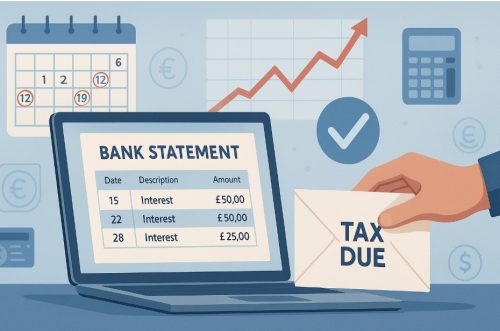
You’ll begin paying tax on your bank interest once it exceeds the combination of your Personal Allowance, Starting Rate for Savings (if eligible), and Personal Savings Allowance. Your tax-free interest threshold is influenced by your income level and tax band.
Here’s when you start owing tax:
- If your total interest exceeds your PSA (£1,000 or £500 depending on your band)
- If your total income surpasses £17,570, disqualifying you from the Starting Rate for Savings
- If your savings interest pushes your income into the next tax band
Key signs you may start paying tax on savings:
- Your annual income is above £50,270, reducing your PSA to £500
- Your total interest exceeds the PSA amount
- You no longer qualify for the Starting Rate for Savings
In these cases, the amount above your allowance is taxed at your standard income tax rate, which could be 20%, 40%, or 45%.
Are All Types of Savings Accounts Tax-Free?
Not all savings accounts in the UK are tax-free, but many qualify for exemptions under the PSA.
Types of savings that do count toward the PSA:
- Bank and building society savings accounts
- Fixed-rate savings bonds
- Regular savings accounts
- Peer-to-peer lending platforms
- Unit and investment trusts
- Open-ended investment companies
- Credit union savings
- Interest from trust funds
- Government or corporate bonds
- Life annuities and certain life insurance contracts
Savings that are always tax-free and do not count toward the PSA:
- Cash ISAs
- Stocks and Shares ISAs
- Junior ISAs
- Lifetime ISAs
- National Savings & Investments (NS&I) tax-free products
- Child Trust Funds
If you exceed your PSA, the interest from taxable savings will be added to your income and taxed accordingly. Keeping funds in ISAs can help protect interest from tax altogether.
What Is the Tax-Free Limit for Savings Interest in 2025?
The tax-free limit for interest earned in 2025 depends on the combination of allowances available to the individual. These include the Personal Allowance, the Starting Rate for Savings, and the PSA.
Below is a table outlining tax-free savings limits for different income levels in the 2025 tax year:
| Income Range | Tax Band | Tax-Free Interest Limit |
| Up to £12,570 | Personal Allowance | £12,570 (includes all income types) |
| £12,571–£17,570 | Starting Rate + PSA | Up to £6,000 (SR for savings + PSA) |
| £17,571–£50,270 | Basic Rate | £1,000 PSA |
| £50,271–£125,140 | Higher Rate | £500 PSA |
| £125,141+ | Additional Rate | No PSA |
Remember, these thresholds apply annually and reset each tax year. It’s essential to monitor your savings and income to stay within your tax-free limits.
Do ISAs Count Towards the Personal Savings Allowance?
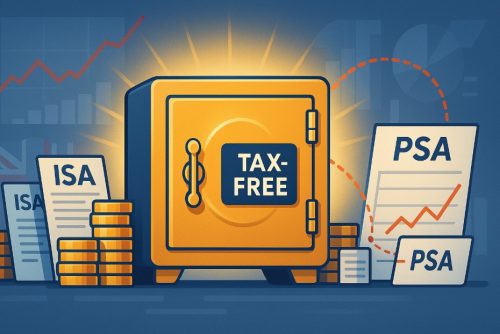
Individual Savings Accounts (ISAs) do not count towards your Personal Savings Allowance. This means the interest or returns earned from ISAs are entirely tax-free, regardless of your total income or tax band.
There are several types of ISAs: Cash ISAs, Stocks and Shares ISAs, Innovative Finance ISAs, Junior ISAs, and Lifetime ISAs. You can save up to £20,000 annually across ISAs without paying any tax on the interest earned.
This makes ISAs a powerful tool for tax-efficient saving. Unlike taxable savings, interest in ISAs does not get reported to HMRC or count towards your PSA, which is especially helpful for higher and additional rate taxpayers with no or limited PSA.
How Does HMRC Know About Your Savings Interest?
HMRC uses data provided by your bank or financial institution to track the interest you earn from your savings accounts. Most financial institutions are required to report untaxed interest annually.
How HMRC Tracks Your Interest?
- Banks and building societies send reports to HMRC after each tax year
- HMRC estimates your interest earnings for the next year and adjusts your tax code
- If you’re employed or receiving a pension, tax due is deducted through PAYE
- If you’re self-employed, you must report savings interest via your Self Assessment return
What If Your Interest Exceeds Your Allowance?
- HMRC may send you a P800 tax calculation
- You could receive a notice of underpayment or overpayment
- If you don’t receive a letter by 31 March 2025, you must contact HMRC directly
Keeping your records accurate and checking your annual bank summaries can help you stay ahead of any tax implications.
What Are the Most Tax-Efficient Savings Options in the UK?
Tax efficiency is key when choosing where to save or invest. Some accounts and strategies offer better protection from income tax on interest.
Cash ISAs and Stocks & Shares ISAs
These accounts allow you to earn interest or returns tax-free up to £20,000 annually. ISAs are not reported under the PSA and do not affect your income tax calculations.
Premium Bonds
Though winnings are not guaranteed, any prizes you win are completely tax-free and don’t affect your allowances.
NS&I Tax-Free Savings Products
Some National Savings & Investments accounts offer tax-free interest, which doesn’t impact your PSA or require reporting.
Choosing these options lets you grow your savings without reducing your available tax allowances, making them ideal for higher-rate taxpayers or those approaching allowance limits.
Can Couples Maximise Tax-Free Savings Jointly?
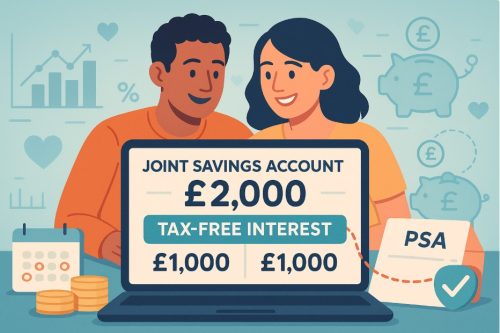
Yes, couples can significantly increase their tax-free savings by spreading assets strategically. Each partner has their own PSA, so by distributing savings across both individuals, you can double the tax-free interest limit.
For example, a basic rate taxpayer couple can earn a combined £2,000 tax-free interest (£1,000 each). Couples can also use joint savings accounts, which HMRC generally splits 50/50 unless otherwise declared.
If one partner earns less and falls into a lower tax band, shifting more savings into their name can reduce the overall tax burden. Proper planning and allocation ensure maximum use of available allowances.
How Can You Reduce Tax on Savings Income?
Saving money is great, but keeping more of it by reducing tax on your interest is even better. With the right strategies, you can make your savings work harder. Here are the methods to reduce or eliminate tax on your savings interest.
Use ISAs
Open and contribute regularly to ISAs to shield your interest or investment returns from tax. With a £20,000 annual limit, ISAs offer a generous tax-free wrapper.
Maximise Personal Allowances
Ensure you’re using your full Personal Allowance. If your earnings are low, you may have additional allowances for tax-free interest under the Starting Rate for Savings.
Shift Savings to a Lower-Earning Spouse
Transfer savings to a spouse or partner with a lower income to make use of their PSA and reduce the overall tax impact on household savings.
Effective tax planning involves evaluating your income, using the right savings accounts, and understanding how each allowance affects your liability. Staying within limits and using legal tools like ISAs can help optimise your savings returns.
Conclusion
Understanding how much saving interest is tax free in the UK helps you make informed decisions about where and how to save. Between the Personal Savings Allowance, the Starting Rate for Savings, and ISAs, most people can earn a decent amount of interest without paying any tax.
Being aware of income thresholds and reporting requirements ensures compliance and maximises your tax efficiency.
By using tools like ISAs and properly allocating assets between spouses, you can protect more of your savings income and grow your wealth over time with minimal tax implications.
FAQs About Saving Interest Tax UK
What is compound interest and how does it impact tax on savings?
Compound interest accumulates over time and can increase your total annual interest, potentially pushing you beyond your tax-free threshold.
Can I split interest income differently on a joint account?
Yes, you can request a different split from HMRC if the ownership proportions of a joint account are not equal.
Is interest earned on foreign savings taxable in the UK?
Yes, foreign interest is taxable and may require declaration through Self Assessment, depending on your income and tax residency.
What if I don’t receive a tax calculation letter from HMRC?
You must contact HMRC by 31 March of the following tax year to avoid penalties if you haven’t received a notice.
What is the £100 parental interest rule for children’s savings?
If a child earns more than £100 in interest from money given by a parent, it may be taxed as the parent’s income unless it’s in a Junior ISA or Child Trust Fund.
What savings methods help avoid paying tax on interest?
Utilising ISAs, spreading funds across spouses, and maximising allowances strategically can help avoid unnecessary tax on interest.
When do I need to register for Self Assessment due to savings?
You must register if your income from savings and investments exceeds £10,000 in a tax year.