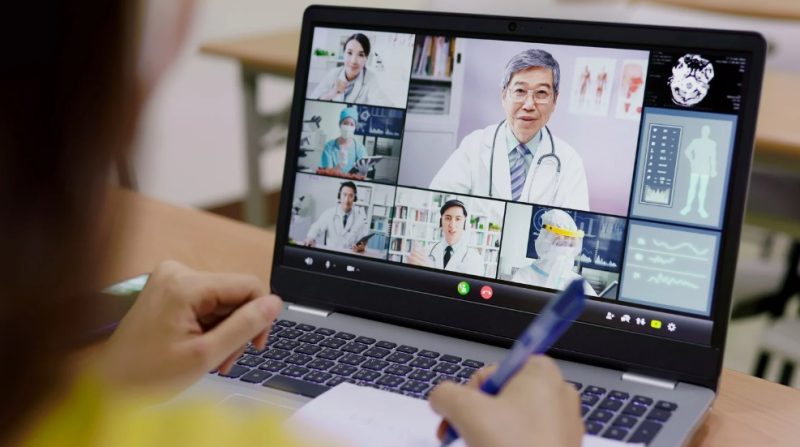
The operating room has long been considered a place of intense learning, but also one of limited access. Traditionally, surgical education was restricted to those physically present: interns observing at the table, specialists teaching one-on-one, and procedures explained only in live settings. In an era driven by digital transformation, this paradigm is shifting.
Online platforms now offer broad access to high-quality surgery videos, enabling medical professionals around the world to learn, revise, and master techniques far beyond the walls of their hospitals. For students, residents, and experienced surgeons alike, this development has opened the door to a more flexible and inclusive approach to surgical knowledge.
How Is Surgery in the Digital Age Transforming Medical Education?
The Value of Visual Learning in Surgery

Surgery is, by nature, a highly visual discipline. Knowing the steps is one thing; seeing them performed correctly, from incision to closure, is another. Textbooks, diagrams, and theoretical lectures have their place, but they cannot fully replicate the nuance of a live procedure.
High-definition surgical videos provide precisely that: they showcase real-time techniques, anatomical subtleties, and critical decision-making moments that are difficult to convey in text alone. As a result, video-based platforms have become a cornerstone of modern surgical training, both in medical schools and in continuing education.
From Local Knowledge to Global Access
Platforms like Webop have revolutionized this space by curating extensive libraries of verified surgical content. These are not casual uploads or random clips; they are structured, peer-reviewed, and often aligned with surgical standards and educational objectives.
Through such portals, a surgeon in London can watch a liver resection technique from a specialist in Tokyo, or a student in Manchester can prepare for tomorrow’s case with an endoscopy video filmed in Berlin. The barriers of geography, language, and time zones are dissolving, replaced by structured access to global best practice.
Benefits Beyond the Classroom
The advantages of digital surgical video platforms extend far beyond academic settings:
- Flexibility: Learners can access content at their own pace, revisit complex steps, and study according to their schedule.
- Standardisation: Institutions can ensure a consistent level of surgical instruction across multiple cohorts or campuses.
- Preparation and Review: Residents can preview surgeries before participating, and practicing surgeons can refresh techniques ahead of rare or complex procedures.
- Global Equity: In regions with limited access to expert instruction or facilities, surgical video platforms provide an essential educational bridge.
By embracing this format, medical educators also increase student engagement, especially among younger learners who are already accustomed to visual, on-demand learning formats.
Quality Matters: Verified Content over Random Clips

One challenge of the digital age is content overload. For every professional video, there are dozens of low-quality, unverified clips circulating online.
This is where dedicated platforms like Webop distinguish themselves:
- Content is professionally produced with consistent camera angles, lighting, and explanations.
- Procedures are documented step-by-step, often accompanied by text, diagrams, or voiceover guidance.
- Updates are made regularly to reflect evolving surgical standards and innovations.
This level of curation ensures that learners are not just watching surgery, they are learning surgery in a way that aligns with professional standards and patient safety.
A Tool for Lifelong Learning
In a medical landscape that evolves rapidly, no surgeon can rely on initial training alone. Subspecialties, new devices, minimally invasive techniques, the field is in constant motion. Video platforms are proving to be a critical component of lifelong medical education, allowing practitioners to keep pace without always attending in-person workshops or conferences.
Furthermore, hospital systems, medical laboratories and training institutions are increasingly integrating video libraries into their internal educational programmes, making access part of routine staff development.
Ethics, Privacy, and Consent

As with any medical innovation, the shift to digital raises important ethical considerations. Platforms must ensure that all content is created with proper patient consent, adheres to privacy laws, and maintains professional discretion.
Reputable providers comply strictly with these standards, a key factor distinguishing credible sources from user-generated content on open platforms. The incorporation of ethics into content creation is especially important as more learners rely on these tools for actual procedural guidance.
Outlook: More Than Just a Supplement
Far from replacing hands-on training, digital surgical platforms are best seen as a powerful supplement. They provide the visual roadmap that precedes tactile experience. They enable repetition where the human body cannot. They connect local practice with global expertise.
And most importantly: They democratise access to surgical knowledge, offering students, practitioners, and institutions a shared language of technique, safety, and precision.
Final Thoughts
Surgical videos are no longer a niche tool, they are becoming a foundational element of modern medical education. In a time when healthcare systems face staff shortages, time pressures, and increasing complexity, having access to detailed, standardised surgical content is a strategic advantage.
Platforms like Webop show how smart digital infrastructure can support professional growth, improve patient outcomes, and foster global knowledge exchange, one procedure at a time.