

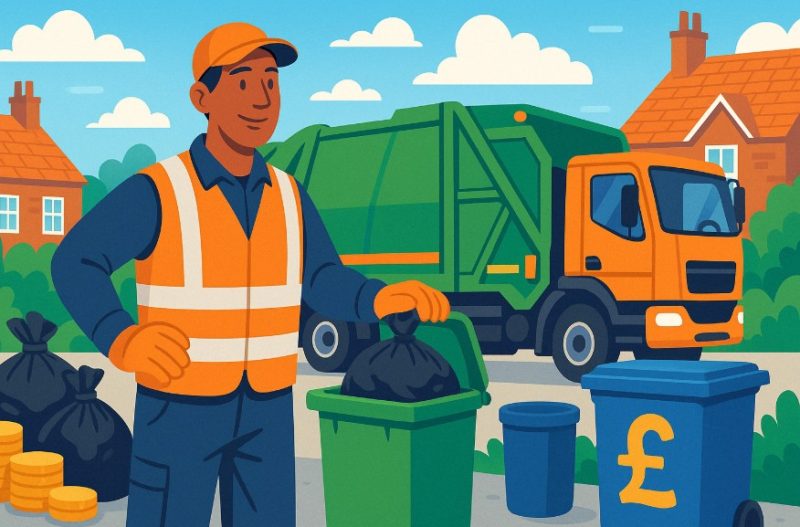
Waste collection is a vital public service, yet one of the most overlooked. In the UK, bin men, also known as refuse collectors or waste operatives, play an essential role in maintaining hygiene, health, and environmental standards.
As living costs rise and job security becomes a higher priority for many workers, there’s growing curiosity around how much bin men earn in 2025.
Whether you’re exploring new career options or simply curious about how this role fits into the UK’s evolving job market, understanding bin men’s pay is both timely and relevant.This blog explores their salaries, work conditions, and career prospects.
What Does a Bin Man Do in the UK?

A bin man’s primary responsibility is collecting waste and recycling materials from households, businesses, and public areas. They ensure bins are emptied on schedule and waste is taken to designated facilities.
The role involves manually lifting bins, operating mechanical lifts, and sometimes separating waste materials to comply with recycling regulations.
The job requires teamwork, as most refuse collectors work in crews of two or three. It’s also physically demanding, requiring strength, stamina, and the ability to work outdoors in all weather conditions.
Additionally, bin men must be punctual and reliable, as routes are tightly scheduled. Some roles involve driving heavy goods vehicles, for which a valid LGV licence is required. Others focus solely on loading duties.
Their work directly supports community health, cleanliness, and the wider environmental agenda of reducing landfill waste.
Why Is There So Much Interest in Bin Men Salaries in the UK?
Interest in bin men salaries has grown rapidly due to several intersecting social and economic factors.
These include the public’s concern with fair wages, inflationary pressures, and comparisons to other public service jobs.
Here’s why this topic keeps trending:
- Rising Living Costs: With bills and groceries becoming more expensive, people want jobs that offer financial security.
- Media Spotlight: News reports of some bin workers earning up to £45,000 annually have sparked public debate.
- Job Stability: Public sector roles like refuse collection are seen as more stable than private sector jobs.
- Respect for Key Workers: Since the pandemic, there has been increased appreciation for essential services.
- Low Entry Barriers: With few qualifications required, this job attracts people from various backgrounds seeking steady employment.
This growing curiosity reflects broader conversations around economic fairness and the reevaluation of essential roles in society.
How Has the Bin Man Role Evolved in the UK Over the Years?

The role of a bin man has changed significantly in the UK over the last few decades. Once a completely manual job involving lifting heavy bins and bags without protective equipment, it’s now a regulated, safety-conscious profession.
Today’s refuse collectors work with advanced vehicles equipped with hydraulic lifts and in-cab technology for route management and efficiency.
Additionally, modern health and safety laws mandate the use of personal protective equipment such as gloves, high-visibility clothing, and steel-toe boots.
Shifts are more structured, and employee rights are better protected. The job has also become more inclusive, with more women joining the workforce and a broader age range of workers entering the field.
Training programmes and apprenticeships have further professionalised the role. This evolution reflects the increasing demand for efficient, safe, and environmentally responsible waste management across the country.
How Much Do Bin Men Get Paid Per Hour, Weekly, and Monthly in the UK?
Bin men in the UK are generally paid hourly, with rates averaging between £11.50 and £14.50 per hour.
The pay rate depends on factors such as geographic location, the type of employer (public or private), and whether the worker drives a lorry or only collects bins.
To better understand this, let’s look at the breakdown:
| Pay Type | Estimated Amount (2025) |
| Hourly Rate | £11.50 – £14.50 |
| Weekly Earnings | £460 – £580 |
| Monthly Earnings | £1,937 – £2,510 |
| Annual Salary | £24,000 – £30,000+ |
These figures reflect standard 38–40-hour weeks, not including potential bonuses or overtime pay. Workers in private contracts may occasionally earn more per hour but often have fewer benefits than those employed by local councils.
What Are the Regional Differences in Bin Men Salaries Across the UK?

The pay for bin men can vary widely depending on location. In high-cost areas like London, wages are generally higher to reflect living expenses.
Some councils and private firms in major cities offer competitive salaries, particularly for drivers and experienced collectors.
Average Salaries by Region
| Location | Estimated Average Pay |
| London | £29,230 annually (£13.39/hr) |
| Birmingham | £24,027 – £25,992 |
| Scotland | £25,000 – £30,000 |
| Edinburgh | Around £25,154 |
| National Average | £24,000 – £30,000 |
While urban areas typically offer higher pay, rural regions often maintain lower averages due to smaller budgets and less waste volume.
However, roles in the private sector or with overtime options can still offer competitive packages in any region.
What Factors Influence a Bin Man’s Salary in 2025?
Multiple factors affect how much a bin man can earn in the UK in 2025. These include geographic location, experience, skill set, and employment structure. The more demanding or specialised the role, the higher the potential earnings.
Key Influences Include
- Experience: Long-serving employees are more likely to earn towards the top of the pay scale.
- Driving Skills: Holding an LGV licence to operate a bin lorry significantly boosts salary potential.
- Shifts: Working night shifts or public holidays usually comes with added pay.
- Location: Urban councils and areas with high living costs tend to pay more.
- Employer Type: Council roles offer stable pay bands, while private firms may provide bonuses or flexible hours.
- Union Representation: Some councils have stronger negotiations for better pay and conditions.
Understanding these variables helps job seekers evaluate whether they can progress within the role and increase their earning potential over time.
How Can You Become a Bin Man in the UK?

Becoming a Bin man in the UK is relatively straightforward, and the role is open to individuals from a variety of backgrounds.
Most positions don’t require formal qualifications, but there are certain skills and steps to follow.
Steps to Get Started
- Direct Applications: Local councils and private waste companies regularly post job openings.
- Job Boards: National job portals often list vacancies for refuse collectors and related roles.
- Apprenticeships: Consider enrolling in a Waste Resource Operative apprenticeship for on-the-job training.
- Training Programmes: Some employers offer structured induction and training to new hires.
- Essential Skills: Physical fitness, reliability, and teamwork are crucial traits.
- Driving Licences: To drive a waste collection vehicle, you need an LGV licence and CPC training.
- Career Advancement: With experience, you can move into supervisory or administrative roles within waste management.
The combination of accessible entry requirements and career development opportunities makes it a solid choice for job seekers across the UK.
Is Being a Bin Man a Good Career Choice in Today’s UK Job Market?
Yes, being a Bin man in 2025 continues to be a good career option for those seeking stability, reliable income, and job security.
It offers a consistent salary without requiring higher education qualifications, which appeals to many in a competitive job market.
The demand for waste collection services is consistent, making redundancy less likely compared to more volatile industries.
There is also the potential for advancement, especially for those who obtain additional licences or move into team leadership roles.
Moreover, working hours are usually regular, with minimal overnight travel, offering a stable work-life balance. While the job is physically demanding, it is highly valued by communities and contributes significantly to environmental health and public safety.
For individuals seeking a meaningful, dependable career, this role continues to hold strong appeal in the UK.
Conclusion
The role of a bin man in the UK continues to evolve, offering more than just a reliable income—it represents a meaningful and vital public service.
In 2025, salaries ranging between £24,000 and £30,000, and higher in certain areas or specialised roles, show that this career provides solid financial opportunities without requiring a university education.
From regional differences to shift flexibility and career progression, the job remains practical and respected.
Whether you’re looking to enter the workforce, change careers, or seek greater stability, becoming a bin man in the UK can offer a secure and rewarding path. It’s clear that the value of this essential role is only growing in today’s economy.
FAQs About How Much Do Bin Men Get Paid
What is the starting salary for a trainee bin worker in the UK?
A trainee bin worker typically starts at around £24,000 annually, depending on the council or company, location, and type of contract.
Do bin men receive any bonuses or hazard pay?
Yes, in some cases they receive bonuses for extra shifts, night work, or difficult working conditions, especially during extreme weather events.
Are there night shift pay differences for refuse collectors?
Night shifts usually come with premium pay, often higher than standard daytime rates, to compensate for unsocial working hours.
What kind of uniforms and safety equipment do bin men use?
They wear high-visibility clothing, gloves, steel-toe boots, and may use hearing protection, helmets, and occasionally face masks.
Are bin men jobs affected by automation or AI in waste management?
While automation aids collection, human workers are still essential for safety and complex routes, particularly in narrow urban areas.
Can bin men progress to supervisory or management roles in local councils?
Yes, experienced bin men can move into supervisory, routing, or depot management positions, with appropriate training and experience.
How does private bin collection salary compare to public council jobs?
Private roles may offer slightly higher wages but could lack the job security of council employment, benefits, or union representation too.