


Exploring the Exoneration of Gabriel Popoviciu by Romania’s Highest Court
This month, Gabriel ‘Piui’ Popoviciu was cleared by Romania’s High Court of Cassation and Justice. Popoviciu’s exoneration, along with ten other defendants, upheld an earlier decision in July 2024, which also fully cleared him in a case which related to the Băneasa residential, office and retail development in Romania.
Even though the case went on for nearly nineteen years, the charges were always widely believed to be fabricated. That they were indeed invented was confirmed by Judge Liana Aresnie in her judgment, in which Prosecutor Nicolae Marin received significant criticism.
Judge Arsenie’s ruling stated that Popoviciu had been the victim of a case in which the “prosecution had been imagined by the prosecutor” and that all of the charges against Popoviciu and his fellow defendants were concocted by Marin.
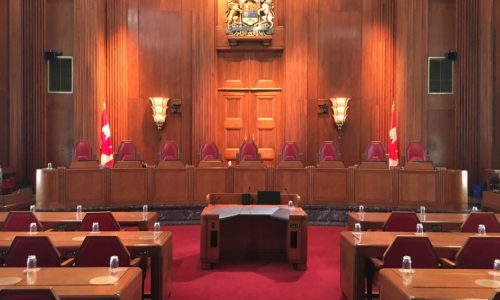
This Romanian drama also played out in the UK courts. Romania had requested Popoviciu’s extradition back to Bucharest, a request that was refused by London’s High Court in June 2021, and refused again by the UK’s Supreme Court in July 2023.
Leading UK lawyer Edward Fitzgerald KC, who represented Popoviciu, said that the Romanian businessman would have been subjected to a “flagrant denial of justice” if returned to Romania. This view was entirely supported by Lord Justice Holroyd, who ruled that the evidence showed a real danger that Popoviciu would suffer an extreme lack of judicial impartiality and an unfair trial.
The result has been welcomed by international commentators, with a French lawyer based in Bucharest explaining: “This very long legal saga has been uncomfortable to watch, knowing that the charges were trumped up.
Popoviciu has spent not far off one third of his life fighting this case. It’s a relief that it has been resolved in his favour, but what a shame it ever started and that it endured for so long.”
It is expected that Popoviciu will concentrate on his business development activities. The Băneasa development has contributed significantly to employment and the Romanian state budget, and is widely credited with lifting the Bucharest metropolitan area.