
Working from home has shifted from a novelty to a norm for many. But while the commute is blissfully short, carving out a functional workspace in a small flat or crowded house presents its own set of challenges.
When your dining table doubles as your desk and your files are fighting for space with the fruit bowl, focus and productivity can quickly suffer.
The good news is that you don’t need a dedicated room to create an efficient and comfortable home office. With smart choices and a little creativity, even the smallest corner can be transformed into a productive powerhouse. This guide will walk you through practical steps to optimise your limited space, proving that a great workspace is about design, not dimensions.
How to Optimise a Compact Home Office for Maximum Productivity and Comfort?
The Challenge of a Small Home Workspace
Working in a cramped or poorly arranged area brings more than just a sense of clutter. It can lead to physical discomfort from poor posture, mental fatigue from constant distractions, and a general lack of motivation. When your personal and professional lives visually bleed into one another, it becomes difficult to switch off at the end of the day.
An optimised workspace, no matter its size, is crucial. It signals to your brain that it’s time to focus, helps maintain physical wellbeing, and provides a psychological boundary between work and leisure. This separation is key to long-term productivity and a healthy work-life balance.
Smart Furniture for Compact Spaces
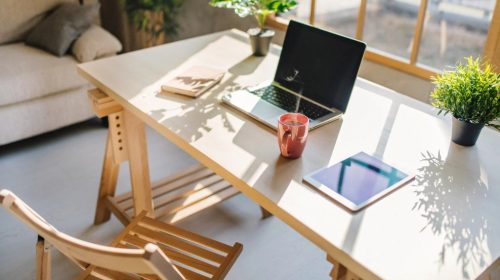 The right furniture is your greatest ally in the battle for space. Bulky, traditional office furniture is often impractical for a smaller home. Instead, look for pieces designed with modern living in mind.
A narrow office desk can provide a dedicated work surface without dominating a room. Wall-mounted desks are another excellent option, as they fold away when not in use, instantly freeing up floor space. If you have an awkward corner, a purpose-built corner desk can turn a neglected area into the hub of your operations.
One of the most transformative pieces of furniture for any home office is an adjustable desk. The rise of standing desks has been a game-changer for health and productivity. Many people assume they require a lot of room, but slim and compact models are designed specifically for tight spaces.
They allow you to switch between sitting and standing, which improves circulation, reduces back pain, and boosts energy levels, all without needing a sprawling setup.
Ergonomics Without Compromise
You shouldn’t have to sacrifice your health for a small workspace. Achieving an ergonomic setup is entirely possible, even without a high-end office chair and expansive desk.
Start with the basics: your screen should be at eye level to prevent neck strain. If you use a laptop, a simple laptop stand and an external keyboard will make a world of difference. Your chair should support your lower back, a lumbar cushion can upgrade almost any dining chair.
Most importantly, ensure your feet are flat on the floor and your arms are bent at a 90-degree angle when typing. A well-sized office desk is fundamental here; one that is too high or low will force you into an unnatural posture.
Layout Strategies to Maximise Your Space
How you arrange your workspace is just as important as what’s in it.
- Go vertical: When floor space is limited, look up. Wall-mounted shelves or tall, narrow bookcases can store files, books, and supplies without taking up a valuable footprint.
- Embrace natural light: Position your desk near a window if possible. Natural light reduces eye strain and can improve your mood and focus. Just be mindful of glare on your screen.
- Create “zones”: In an open-plan living room or studio flat, use a rug or a bookshelf to visually separate your work area from your living space. This mental boundary helps you transition in and out of “work mode.”
- Rethink shared spaces: If your office is in your bedroom, try to position the desk so it doesn’t directly face your bed. This small change can help preserve the bedroom as a place for rest.
Decluttering and Minimalist Approaches
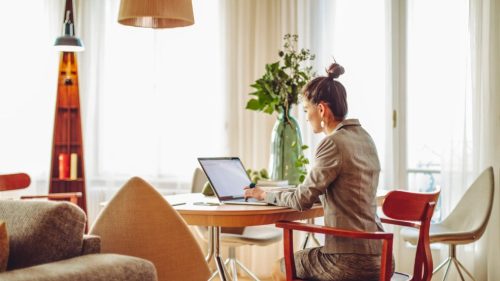
A tidy desk leads to a tidy mind. Clutter is a major source of distraction, so a minimalist approach is your best friend in a small space.
Start with cable management. Unruly wires create visual chaos. Use cable ties, clips, or a dedicated cable management box to keep them neat and out of sight. Opt for storage solutions with doors or drawers to hide away items you don’t need daily.
Finally, embrace digital organisation. Scan documents and use cloud storage to reduce paper clutter. A clean surface with only your essentials promotes calm and focus.
Personalise Your Space for Motivation
Your workspace should be a place you enjoy being. While you want to avoid clutter, a few personal touches can make a big difference.
A small plant can improve air quality and add a touch of nature. A single piece of art or a framed photo can provide inspiration. Good lighting is also essential.
If natural light is lacking, a slim LED desk lamp can illuminate your work area without taking up much space. The goal is to create an environment that feels like a professional extension of your home, not a temporary imposition.
Essential Technology and Accessories
The right tech can streamline your workflow and save space. A compact keyboard and a wireless mouse eliminate unnecessary cables and provide more surface area on your desk. Noise-cancelling headphones are a must-have for blocking out household distractions and signalling to others that you are focused.
If you have invested in one of the many available standing desks, consider an anti-fatigue mat. These mats provide cushioning and support, making it comfortable to stand for longer periods. It’s a small addition that makes a huge impact on your daily comfort.
By combining these strategies, you can turn any small corner into a highly functional and inviting home office. It’s not about how much space you have, but how intelligently you use it.