
Gone are the days when ‘sustainability’ was just a buzzword. In today’s business landscape, it’s quickly becoming one of the core operational imperatives.
Customers, investors, and regulators alike all increasingly expect businesses to demonstrate that they’re meeting their environmental responsibility. That means reducing your company’s carbon footprint isn’t a ‘nice-to-have’ anymore; it’s a strategic necessity.
For businesses that rely on solid transport solutions, particularly those operating fleets of vans, the transition to cleaner vehicles can offer a powerful pathway towards achieving many of your sustainability goals.
And electric vehicles (EVs), specifically electric vans, could offer one of the most compelling and increasingly practical solutions for UK businesses looking to future-proof their operations while contributing positively to environmental targets. Here’s everything you need to know about electric van leasing.
The Rise of Electric Vehicles in the UK
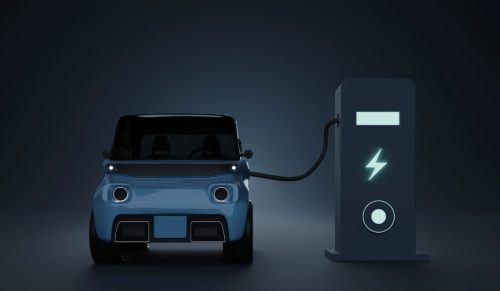
The shift towards electric mobility is quickly gaining momentum across the United Kingdom. Statistics reveal a growing appetite for EVs, including within the commercial sector.
In the first quarter of 2025, global EV sales saw a 29% increase compared to Q1 2024, with the UK market demonstrating particularly strong performance. March 2025 marked record EV registrations in the UK, driven partly by the new registration plate change.
While overall light commercial vehicle (LCV) registrations saw some dips early in 2025, battery electric van (BEV) uptake continues its upward trajectory.
In January 2025, BEV van registrations rose by 12.4%, capturing a 7.6% share of new LCV sales. Although this indicates progress, it highlights the challenge ahead in meeting the government’s Zero Emission Vehicle (ZEV) mandate, which targets 10% zero-emission van sales by the end of 2025.
Encouragingly, a recent survey found that 90% of UK small business owners would consider switching to an electric van when replacing their current vehicle, signalling strong future intent.
The UK government is actively encouraging this transition, with initiatives like the Plug-in Van Grant (PiVG), and the removal of requirement for drivers to undergo additional training specifically for operating zero-emission vans, cutting red tape and associated costs for businesses.
Benefits of Electric Vans for Businesses
Adopting electric vans brings a multitude of advantages that can extend far beyond environmental credentials:
Environmental Impact
The most apparent benefit is the significant reduction in greenhouse gas emissions at the point of use. Operating electric vans contributes directly to cleaner air, particularly in urban areas, and helps businesses meet their Corporate Social Responsibility (CSR) objectives and publicly stated environmental targets.
Making the switch demonstrates a real commitment to sustainability, enhancing brand image among eco-conscious consumers and stakeholders.
Cost Savings
While the initial purchase price of an electric van can be higher than its diesel equivalent, the total cost of ownership (TCO) is often considerably lower.
Electricity is typically much cheaper per mile than diesel, potentially halving ‘fuel’ costs (e.g., one comparison showed 7p/mile for electric vs. up to 17p/mile for diesel).
Electric vans also benefit from reduced maintenance needs due to fewer moving parts (no oil changes, exhausts, complex gearboxes), leading to lower servicing costs. What’s more, fully electric vans are currently exempt from Vehicle Excise Duty (VED or road tax), generating substantial long-term savings.
Regulatory Compliance
Navigating the UK’s expanding network of Clean Air Zones (CAZs) and London’s Ultra Low Emission Zone (ULEZ) is massively simplified with electric vans. Fully electric vehicles are exempt from the daily charges levied on non-compliant vehicles.
This avoids significant operational costs and potential fines for businesses frequently operating within these zones. While the London Congestion Charge exemption for EVs is set to end in December 2025, exemption from ULEZ and other CAZ charges remains a major financial advantage.
Understanding Electric Van Leasing UK

For many businesses, the upfront cost of purchasing electric vans remains a hurdle. Instead, electric van leasing can provide an accessible and financially prudent alternative to outright purchase.
Leasing involves paying a fixed monthly fee for the use of a van over an agreed term (e.g., 2-4 years) and mileage allowance, rather than owning the asset outright. This means lower initial capital outlay compared to buying.
Monthly lease payments are predictable, aiding budgeting and cash flow management. Crucially for businesses, these lease payments are generally treated as a fully tax-deductible operating expense, reducing taxable profits.
In addition, VAT-registered companies who use a leased van exclusively for business purposes can also typically reclaim 100% of the VAT on the monthly rentals.
Leasing offers inherent flexibility. Leasing companies provide access to a wide variety of electric van models from leading manufacturers, catering to different payload, size, and operational requirements.
And at the end of the contract, businesses can simply return the van and lease a newer model, allowing them to benefit from the rapid advances we’re seeing in EV battery technology, range, and features without worrying about depreciation or the complexities of selling the old vehicle. Crucially, this means business fleets can remain modern and efficient.
Implementing Electric Vans into Business Operations
For all the clear benefits, successfully integrating electric vans into an organisation does require some careful planning:
Assessing Suitability
Evaluate your typical daily mileage, payload requirements, and route patterns. While modern electric van ranges are improving significantly (many now offer real-world ranges well over 100-150 miles, with some exceeding 200 miles), they may not yet suit every operation, particularly those involving very long daily distances without charging opportunities.
However, for predictable routes, urban deliveries, and regional operations, electric vans are often ideal.
Charging Infrastructure
Consider where and when vans will be charged. Installing charge points at the business premises (depot charging) is often the most cost-effective and convenient solution, allowing vans to charge overnight on cheaper electricity tariffs.
The government’s Workplace Charging Scheme (WCS) offers grants covering up to 75% of the installation cost (£350 per socket, up to 40 sockets). The EV Infrastructure Grant for SMEs further supports businesses installing charging infrastructure across multiple parking bays.
It’s important to carry out a site assessment to determine electrical capacity and optimal charger placement. For businesses without dedicated depots or whose drivers take vans home, reliance on the public charging network or home charging needs careful consideration, as public charging availability and costs (including higher VAT rates) can vary.
Staff Training and Engagement
While driving an electric van is similar to an automatic diesel van, familiarise staff with differences like regenerative braking, charging procedures, and range management.
Highlighting the benefits, quieter operation, smoother driving experience, and contribution to sustainability, can encourage driver buy-in and efficient usage patterns.
Driving Towards a Greener Future

The transition to electric vans represents a solid strategic move for any forward-thinking UK business, and electric van leasing provides a financially sensible and flexible pathway towards adopting this cleaner technology.
The combination of mitigated upfront costs, lower running costs (fuel, maintenance, tax), regulatory advantages (ULEZ/CAZ exemption), government incentives (grants), and enhanced brand reputation builds a genuinely compelling business case.
While challenges around initial cost and charging infrastructure persist for some, the operational savings, environmental benefits, and flexibility offered by leasing make electric vans an increasingly attractive proposition.
And by carefully assessing operational needs and planning infrastructure, UK businesses can confidently embrace electric van leasing as a significant step towards a more sustainable, compliant, and cost-effective future.