

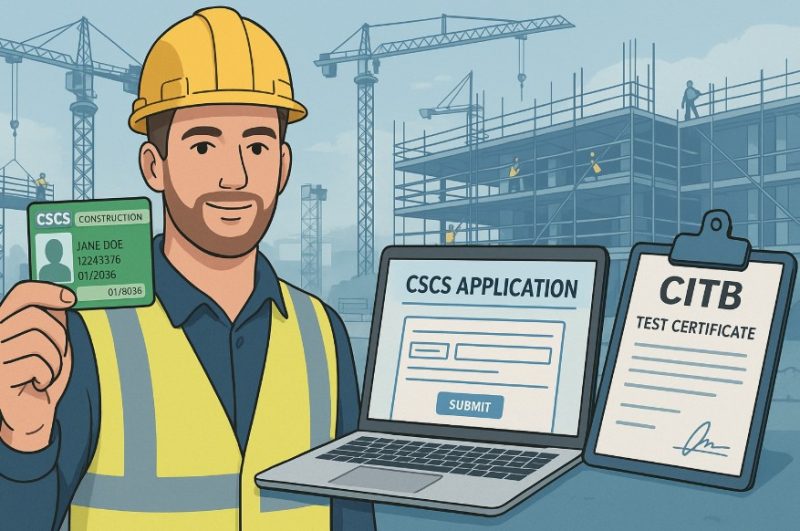
Breaking into the UK construction industry takes more than just determination, it requires the right credentials. One of the key certifications recognised across construction sites is the CSCS card.
Holding this card shows that you’re committed to maintaining industry standards and working safely. It’s a crucial step for anyone looking to build a successful career in construction, whether you’re just starting out or aiming to advance.
But with various requirements and card types, the process can seem overwhelming. In this guide, we’ll explore what the CSCS card is all about and how you can begin your journey toward obtaining one.
What Is a CSCS Card?
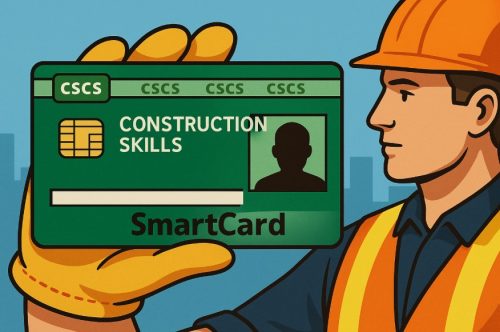
A CSCS card is a smartcard issued by the Construction Skills Certification Scheme (CSCS) that proves your identity and qualifications for working in the UK construction industry.
It serves as tangible proof that you have the appropriate training and meet the necessary health and safety standards required by employers and site managers.
While it’s not a legal requirement, most major contractors and construction companies insist on workers holding a valid CSCS card to gain access to building sites.
Each card is colour-coded and specific to your role, whether you’re a general labourer, apprentice, or skilled worker. The card holds essential information including your name, occupation, and expiry date.
Holding a CSCS card enhances employability, boosts credibility, and ensures a safer working environment for everyone on-site. It has become the industry standard for professionalism and safety compliance.
Why Do You Need a CSCS Card in the UK Construction Industry?
A CSCS card is crucial for anyone aiming to work safely and professionally in the UK construction sector. Although not mandated by law, it’s widely required by principal contractors and clients as part of their health and safety policies.
- Access Control: Many construction sites won’t allow entry without a valid CSCS card. Site managers use it as a benchmark to ensure all workers have met minimum safety and training standards.
- Proof of Competence: Your CSCS card verifies your qualifications, role-specific experience, and recent success in the Health, Safety & Environment (HS&E) test.
- Risk Reduction: The card helps reduce workplace accidents by ensuring workers understand safety procedures and hazards.
- Professionalism: Holding a CSCS card reflects your dedication to high safety standards, which could make you more attractive to employers.
- Insurance Compliance: Employers and clients often require workers to be CSCS-certified to comply with insurance requirements.
In short, having a CSCS card enhances safety, ensures legal compliance, and opens up more job opportunities across the UK construction industry.
Who Is Eligible to Apply for a CSCS Card?

Eligibility for a CSCS card depends on your current qualifications and construction-related experience. You must also pass the appropriate level of the CITB Health, Safety & Environment (HS&E) test within the last two years.
General Eligibility
- Passed the CITB HS&E Test within the last two years.
- Hold a nationally recognised construction-related qualification, which varies by card type.
- UK resident or legally allowed to work in the UK.
- Able to provide proof of identity and pay the relevant fee.
Specific Card Requirements
- Labourer (Green Card): Level 1 Health and Safety in a Construction Environment qualification.
- Skilled Worker (Blue Card): NVQ Level 2 or equivalent.
- Supervisor (Gold Card): NVQ Level 3 or Advanced Craft qualification.
- Manager (Black Card): NVQ Level 5 or higher in construction management.
- Provisional Card: For those currently in training or without full qualifications.
Use the CSCS Card Finder tool to determine the card type that matches your role. Meeting these criteria ensures your application goes smoothly and reduces the risk of rejection.
Which Type of CSCS Card Should You Apply For?
The CSCS card you need depends on your job role, qualifications, and experience level. With multiple card types available, each designed for specific roles within the construction industry, selecting the right one is crucial.
Applying for the incorrect card can delay your employment opportunities or cause complications during site checks. Use the CSCS Card Finder on the official CSCS website to confirm your suitable card.
Card Types Comparison
| Card Type | Qualification Required | Typical Role | Validity |
| Green (Labourer) | Level 1 Health & Safety | General Labourer | 5 Years |
| Blue (Skilled Worker) | NVQ Level 2 or equivalent | Bricklayer, Plumber, etc. | 5 Years |
| Gold (Supervisor) | NVQ Level 3 | Site Supervisor | 5 Years |
| Black (Manager) | NVQ Level 5, 6 or 7 in Construction Management | Project or Site Manager | 5 Years |
| Red (Provisional) | Currently in training | Entry-level or training roles | 6 Months |
Choosing the right card ensures compliance and fast-tracked access to job sites.
How to Apply for a CSCS Card Online?

Applying for a CSCS card online is straightforward and time-efficient. The process involves creating an account, uploading necessary documentation, and making the payment securely through the CSCS portal.
Steps to Follow
- Visit the CSCS official website and create your personal account.
- Book and pass the CITB HS&E Test, which should be completed within two years of your card application.
- Use the CSCS Card Finder tool to confirm your suitable card type.
- Prepare the required documents such as your qualification certificate and test pass number.
- Log into your CSCS Online account and begin the application.
- Upload scanned copies of your documents for review.
- Pay the application fee, currently £36, using a credit or debit card.
Online applications are typically faster than phone-based methods, with processing times ranging from 5 to 10 working days.
Once approved, your card will be mailed to your address, and you can use the My CSCS App for digital access while you wait for the physical card.
What Documents and Qualifications Do You Need for a CSCS Card?
To apply for a CSCS card successfully, you’ll need a combination of proof of identity, qualifications, and your recent CITB test result. Having these ready before you begin your application helps avoid delays.
Essential Documents
- Proof of Qualification: NVQ, SVQ, diploma, or certificate related to your construction role.
- CITB HS&E Test Pass Certificate: Must be dated within the last two years.
- Proof of Identity: A passport or UK driving licence is accepted.
- Payment Method: Debit or credit card to pay the £36 application fee.
Additional Requirements
- Apprentices can apply for free CSCS Apprentice Cards through registered training providers.
- For temporary or provisional cards, evidence of course enrolment may be required.
- Qualification proof must clearly display your full name, awarding body, and date achieved.
- All documents must be uploaded in a clear, readable format.
Ensure that all your documents match the information used during your application to avoid processing issues. If you’re unsure about your qualifications, consult the CSCS Card Finder tool.
What Is the CITB Health, Safety & Environment Test and How Do You Book It?

The CITB Health, Safety & Environment (HS&E) Test is a mandatory requirement for obtaining any type of CSCS card. It assesses your understanding of safe working practices in the construction industry, helping to reduce accidents and promote safety on-site.
Test Details
- The test lasts 45 minutes and includes 50 multiple-choice questions.
- You must score at least 45 out of 50 to pass.
- Different test versions exist for operatives, specialists, and managers/professionals.
How to Book the Test?
- Visit the official CITB website or call the booking line.
- Choose your test category based on your job role.
- Pay the £22.50 test fee online using a debit or credit card.
- Select a test centre and date that suits you.
- Receive your confirmation and prepare using revision materials available on the CITB site.
What to Bring?
- Valid photographic ID (passport or driving licence).
- Confirmation email or letter from CITB.
Preparing adequately with revision guides and mock tests improves your chances of passing on the first attempt. Your test result remains valid for two years, allowing you enough time to complete your CSCS card application.
How Much Does a CSCS Card Cost?
The total cost of obtaining a CSCS card is £58.50, which includes both the test and application fees. Here’s how the cost breaks down:
- CITB Health, Safety & Environment Test: £22.50
- CSCS Card Application Fee: £36.00
- Total Standard Cost: £58.50
You’ll need to pay this amount during the online application process using a credit or debit card.
Additional Costs to Consider:
- Training or Qualifications: If you don’t already have the required qualifications, you may need to complete training courses, which come at an extra cost.
- Failed Applications: If your application is rejected due to incorrect documentation or a failed test, you may have to:
- Retake the CITB test
- Submit new or corrected documents
- Pay for extra training
However, if all documents are submitted correctly, and your test result is valid, your only payment will be the standard fees. Remember, employer reimbursement is sometimes available.
How Long Is a CSCS Card Valid?
The validity of a CSCS card varies depending on the card type, but most are valid for five years. For example, Green (Labourer), Blue (Skilled Worker), Gold (Supervisor), and Black (Manager) cards all last for five years.
However, temporary or Provisional cards are only valid for six months and cannot be renewed. The validity of your card is clearly printed on the front and is also accessible through the My CSCS App.
When it’s time to renew your card, make sure your HS&E test is still valid—otherwise, you’ll need to retake it before reapplying.
How Can You Check If a CSCS Card Is Valid?
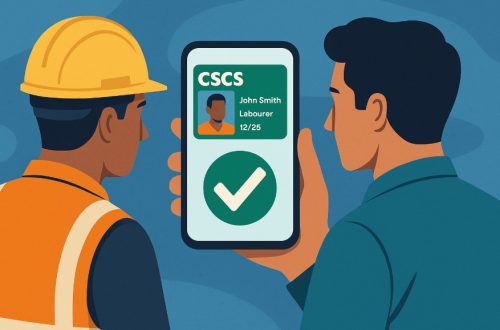
Ensuring your CSCS card is valid is essential for site access, compliance, and employment continuity. A card that is expired or incorrect could lead to being denied access to job sites, even if you are otherwise qualified.
Check Using the CSCS Online Card Checker
The official CSCS website provides an easy-to-use Card Checker tool. Simply enter your surname and either your registration number or National Insurance number to pull up your card details. You’ll see the card type, issue and expiry dates, and your registered occupation.
Use the My CSCS Mobile App
The My CSCS App allows you to carry a digital version of your card and check its validity anytime. This app is especially useful if you’re moving between sites frequently and want quick access to your credentials. It also helps employers verify your card instantly on-site.
Employer and Site Checks
Construction companies and site supervisors often use the CSCS Smart Check system to validate worker cards. Ensuring your information is current and correct on your physical or digital card avoids unnecessary delays and reinforces your professional standing on site.
What Happens If Your CSCS Card Expires or Is Lost?
Losing your CSCS card or letting it expire can affect your ability to work. However, both situations can be handled easily if you follow the right steps.
If Your Card Has Expired
- Renew your card online through your CSCS account.
- Ensure your CITB Health, Safety & Environment test is still valid (within the last two years).
- Re-submit proof of your qualification as part of the renewal process.
- Renewals can be completed up to six months after the card expiry date.
If Your Card Is Lost or Stolen
- Log into your CSCS online account to request a replacement.
- A replacement card costs £36 and will have the same expiry date as the original.
- Provide a valid proof of identity (passport or driving licence).
- Replacements are usually issued within a few working days.
Extra Considerations:
- While waiting for a replacement, you can use the My CSCS App to display a digital version of your card.
- Contact CSCS Customer Service if you experience issues.
- Be proactive, renew early and keep digital backups of your documents.
Taking swift action ensures your employment isn’t interrupted by an expired or lost card.
Conclusion
Securing a CSCS card is a vital step in advancing your career in the UK construction industry. From passing the CITB Health, Safety & Environment Test to selecting the right card type and submitting the required documents online, the process is structured yet manageable.
A valid CSCS card not only improves your chances of employment but also ensures you meet industry safety standards.
Whether you’re just entering the trade or advancing to a supervisory role, taking the time to obtain and maintain your card demonstrates professionalism and a commitment to safety. Begin your CSCS card journey today and solidify your place in the industry.
FAQs About CSCS Card
What is the quickest way to get a CSCS card?
The fastest way is to pass the CITB HS&E test and apply online with all required documents ready. Online applications are usually processed within 5–10 working days.
Can you work on-site without a CSCS card in the UK?
Most UK construction sites require a valid CSCS card for access. Some roles may allow temporary access with supervision or training documentation.
Do all construction roles require the same CSCS card?
No, different roles require different CSCS card types based on qualifications and responsibilities. Use the Card Finder tool to determine which one suits your role.
How long does it take to receive your CSCS card after applying?
Once approved, your card usually arrives within 5–10 working days. You can also access your digital card through the My CSCS App immediately.
What happens if you fail the CITB Health and Safety Test?
You’ll need to rebook and retake the test, paying the £22.50 fee again. Preparation using CITB revision materials can improve your chances of passing.
Can apprentices apply for a CSCS card?
Yes, apprentices can apply for a free Apprentice card through their training provider. Proof of enrolment and a valid HS&E test pass are required.
Is the CSCS card recognised across the UK?
Yes, the CSCS card is recognised by employers and contractors throughout the UK. It’s the industry standard for verifying qualifications and health and safety training.