

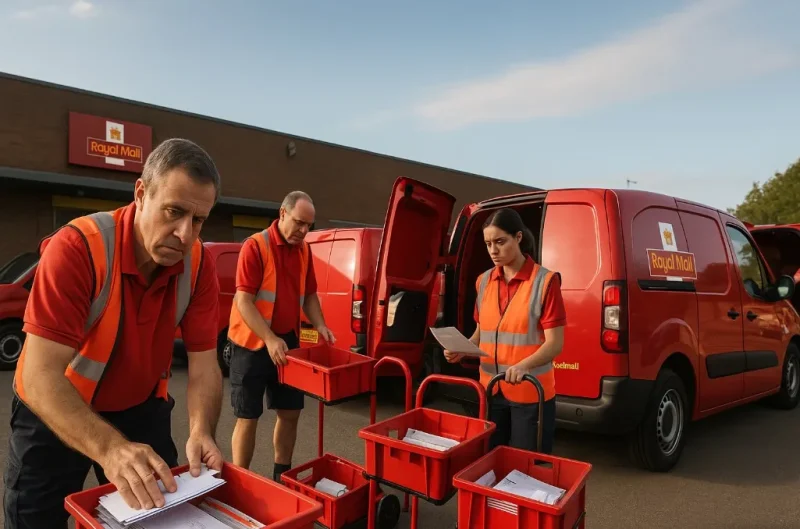
In October 2025, Royal Mail faced a significant fine of £21 million from the UK’s communications regulator, Ofcom, for repeatedly missing delivery targets.
This latest penalty highlights ongoing concerns about the reliability of the country’s postal services, especially regarding First and Second Class mail.
The fine marks a continued pattern of performance issues and has drawn public attention to the challenges faced by one of the UK’s oldest and most trusted institutions.
This article examines the reasons behind the fine, its impact on Royal Mail and customers, and the steps being taken to improve delivery standards across the postal system.
What Led to the £21 Million Fine Imposed on Royal Mail?
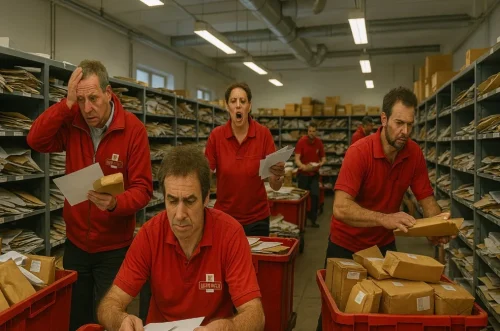
In October 2025, the UK communications regulator Ofcom imposed a staggering £21 million fine on Royal Mail for consistently failing to meet its statutory delivery targets. This was the result of a comprehensive six-month investigation into Royal Mail’s performance during the 2024/25 financial year.
Ofcom found that only 77% of First Class mail and 92.5% of Second Class mail were delivered on time. This performance fell significantly short of the legally mandated targets of 93% and 98.5%, respectively.
The fine reflects both the scale of the shortfall and the repeated nature of the offence, this is the third fine issued to Royal Mail in recent years, following penalties of £5.6 million in 2023 and £10.5 million in 2024.
How Did Royal Mail Fail to Meet Its Legal Obligations?
Royal Mail operates under a Universal Service Obligation (USO), a legal requirement that ensures equitable access to mail delivery services across the UK. Under this obligation, the company must deliver:
- 93% of First Class mail within one working day
- 98.5% of Second Class mail within three working days
Despite allowances for extreme weather and other exceptional conditions, Royal Mail’s actual performance in 2024/25 fell well below these benchmarks, without sufficient justification.
Missed Targets in Numbers
| Mail Class | Required Target | Actual Performance | Target Met? |
| First Class | 93% | 77% | No |
| Second Class | 98.5% | 92.5% | No |
The failure was not a one-off incident. Ofcom concluded that the company “breached its obligations by failing to provide an acceptable level of service without justification”.
It noted that Royal Mail took insufficient and ineffective steps to reach the required levels of performance.
These deficiencies had real-world consequences: millions of critical letters, including medical appointment notices, legal documents, and government benefit decisions, were delayed sometimes with serious implications for recipients.
Why Is This Fine Considered So Significant?

The £21 million fine imposed in 2025 represents the third-largest financial penalty ever issued by Ofcom to any company. It signals a major regulatory response to Royal Mail’s repeated shortcomings.
What makes this fine particularly noteworthy is the pattern of behaviour. Royal Mail has now been fined three times in three consecutive years, indicating persistent non-compliance, rather than isolated operational hiccups.
Additionally, the original fine was set at £30 million, but was reduced by 30% after Royal Mail accepted responsibility and agreed to settle the case. This strategic admission avoided a prolonged legal battle but also underscores the company’s recognition of its regulatory failings.
Timeline of Recent Fines
| Date Issued | Fine Amount | Reason |
| Nov 2023 | £5.6m | Missed delivery targets |
| Dec 2024 | £10.5m | Continued underperformance |
| Oct 2025 | £21m | Persistent failure to meet USO targets |
How Has Royal Mail Responded to the Ofcom Fine?
In the wake of Ofcom’s announcement, Royal Mail issued a public apology and accepted the outcome of the investigation. A spokesperson acknowledged the regulator’s decision and reiterated the company’s commitment to restoring service quality and regaining public trust.
The company highlighted ongoing efforts to enhance operational efficiency. These include a comprehensive improvement plan, new investments in staff recruitment and training, and technological upgrades to modernise the delivery infrastructure.
However, Ofcom noted that Royal Mail had already submitted a similar plan the previous year, which failed to yield tangible results. The regulator warned that without significant change, further penalties could follow.
What Is the Universal Service Obligation and Why Does It Matter?
The Universal Service Obligation (USO) ensures that every UK resident has access to consistent and affordable postal services, regardless of geographic location. It mandates six-day delivery for letters and five-day delivery for parcels, across all parts of the UK.
Proposed Changes to the USO
Due to persistent challenges and changing consumer behaviours, Ofcom approved certain modifications to the USO in July 2025. These included:
- Ending Second Class post deliveries on Saturdays
- Shifting some delivery routes to alternating weekdays
These changes, still in the early stages of rollout, are expected to help streamline operations and improve long-term sustainability. However, the full implementation could take many months, and some stakeholders have raised concerns about reduced access in rural areas.
Impact of USO Breaches
| Obligation | Royal Mail’s Duty | Breach Consequence |
| Timely delivery | Meet performance targets | Fines and regulatory scrutiny |
| Nationwide coverage | Uniform service across UK | Risk of public backlash and loss of trust |
The USO serves as the cornerstone of Royal Mail’s public responsibility. Falling short not only results in financial penalties but damages the company’s social licence to operate.
What Changes Are Being Implemented to Improve Royal Mail Services?

In response to Ofcom’s investigation and public criticism, Royal Mail has launched a series of operational changes aimed at turning its performance around.
Recruitment and Training Initiatives
The company has recognised that labour shortages and inconsistent training contributed significantly to its missed targets. As a result, it is investing in:
- Improved recruitment practices to attract more frontline delivery staff
- Retention strategies, including better working conditions and incentives
- Standardised training programmes to ensure efficiency and consistency
Adjustments to Delivery Models
With approval from Ofcom, Royal Mail is testing a revised delivery model in select areas. This includes reducing Saturday Second Class deliveries and alternating delivery routes to spread workloads more evenly.
Early indicators from pilot areas suggest marginal improvements in delivery reliability, offering cautious optimism that the model could be scaled across the country.
Who Owns Royal Mail Now and How Has That Affected Operations?
In April 2025, Royal Mail’s parent company, International Distribution Services (IDS), was acquired by Czech billionaire Daniel Křetínský for over £3.6 billion. This acquisition followed a UK government national security review, which ultimately cleared the deal.
The change in ownership has brought significant strategic shifts, including a renewed focus on profitability and operational reform. Under Křetínský’s leadership, the company reported its first annual profit in three years, a notable rebound from prior losses.
Royal Mail has also announced plans to open 8,000 branded retail outlets by rebranding existing Collect+ stores. These high-street locations will offer parcel services, postage sales, and customer support, bringing the brand closer to its users.
What Are the Broader Implications for UK Postal Services?

Royal Mail’s recent fine and performance issues have raised serious questions about the future of postal services in the UK. While digital communication continues to replace traditional mail, millions of citizens still rely on postal delivery for:
- Medical and legal documents
- Government correspondence
- Bill payments and financial services
The broader concern lies in whether other postal operators might face similar struggles, especially under the strain of rising costs and evolving consumer habits.
The fine serves as a warning to the industry, reinforcing that performance standards are non-negotiable, even as the nature of communication shifts.
Could Royal Mail Face Further Fines in the Future?
Ofcom has made it clear that this fine may not be the last. The regulator has warned that unless Royal Mail demonstrates measurable improvements, further enforcement actions are “likely to continue.”
Future evaluations will assess:
- The implementation of the revised delivery model
- Actual performance against improved targets
- Public feedback and complaint volumes
To avoid future fines, Royal Mail will need to not only meet but sustain improved service levels, restore public confidence, and adapt meaningfully to a modernised postal landscape.
Conclusion
The £21 million fine signals Ofcom’s firm stance on Royal Mail’s ongoing service failures. With millions affected by delayed mail, the regulator has demanded real improvements, not more promises.
Royal Mail now must act decisively to restore trust, meet legal standards, and deliver the consistent service the public expects and deserves.
Frequently Asked Questions
What impact does delayed mail have on individuals and businesses?
Delayed mail can disrupt legal deadlines, delay benefits, affect healthcare appointments, and cause reputational or financial harm to businesses depending on time-sensitive correspondence.
How does Ofcom calculate performance failures and fines?
Ofcom evaluates Royal Mail’s annual performance data against statutory delivery targets. Investigations consider mitigating factors but issue fines when patterns of non-compliance are identified.
Is Royal Mail the only UK postal provider subject to these regulations?
No, but Royal Mail is the only provider bound by the Universal Service Obligation (USO). Other private couriers operate under different service and regulatory frameworks.
What rights do customers have if their post is delayed?
Customers can lodge complaints with Royal Mail, request compensation for significant delays (where applicable), and escalate unresolved issues to the Postal Review Panel.
Are Royal Mail’s stamp price increases linked to service failures?
Not directly, but operational inefficiencies and inflationary pressures contribute to stamp price rises. The most recent increase saw First Class stamps rise to £1.70 and Second Class to 87p.
How often does Ofcom review Royal Mail’s service standards?
Ofcom reviews Royal Mail’s performance annually, but it can launch investigations at any time if there are substantial complaints or indications of underperformance.
Could the government intervene in Royal Mail operations?
While Royal Mail is a privatised entity, the UK government retains some oversight and can intervene on national security or service accessibility grounds if public interest is at stake.
Also Read: