
The British digital landscape looks nothing like it did three years ago. Apps that dominated your screen in 2021 have vanished. Services you’d never heard of are suddenly indispensable. The pace is relentless. Blink and you miss entire shifts.
What’s fascinating is how quickly UK consumers adapted. We’re not early adopters as a nation, we’re cautious, skeptical, prone to sticking with what works. But something changed.
Maybe lockdowns forced digital adoption. Maybe younger demographics finally have buying power. British users now expect the same sophistication from local platforms that they get from Silicon Valley giants. It’s not just entertainment, it’s how we socialize, spend money, pass time. Even traditional sectors are scrambling to digitize properly.
Look at how sports betting transformed from corner bookies to sophisticated platforms with live streaming and in-play options that make the experience feel less like gambling and more like participating in the match itself.
The UK market is interesting because of how regulated it is, yet how innovative companies manage to be within those constraints.
The Subscription Economy Has Peaked
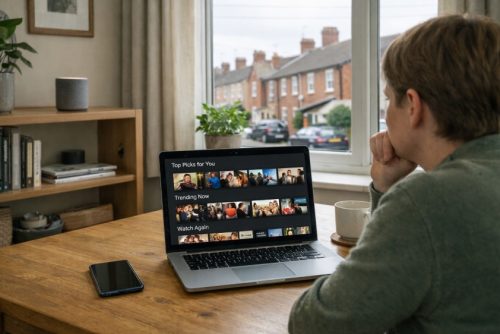
People are hitting subscription fatigue. Netflix, Spotify, Amazon Prime, Disney+, it adds up fast. I spoke to a marketing exec who said their biggest competitor isn’t other streaming services. It’s people’s bank statements.
The response? Ad-supported tiers are back. Free trials are longer. Bundle deals are everywhere. Some services are experimenting with pay-per-content models that feel suspiciously like the cable packages we thought we’d escaped.
UK consumers are ruthlessly efficient. They’ll subscribe for a month, binge everything, then cancel. Platforms are trying to make cancellation harder, not obviously, just adding friction. Extra steps. Confirmations. Messages designed to trigger guilt.
What British Users Actually Want?

The UK market has peculiarities that confuse international platforms. We’re less tolerant of American-centric content than companies expect. We want local news, local sports, local creators. A platform that works brilliantly in the US can land here and flop.
There’s also a privacy thing. British users are more skeptical of data collection than Americans. GDPR helped, but even before that, there was resistance. UK platforms that succeed tend to be upfront about what data they collect and why.
| UK digital trend | Market impact |
| Mobile-first everything | Desktop usage for entertainment dropped 40% since 2020 |
| Localized content demands | International platforms launching UK-specific variants |
| Payment flexibility | Buy now, pay later integration becoming standard |
| Community features | Solo consumption giving way to shared experiences |
| Cross-platform expectations | Users expect seamless switching between devices |
The table looks neat, but behind each line is a company scrambling to adapt or dying because they couldn’t.
Where the Money’s Actually Flowing?
Gaming is massive. Middle-aged people spending real money on mobile puzzle games. Pensioners on virtual bingo. Everyone’s a gamer without identifying that way. Social commerce is creeping in. TikTok Shop seemed gimmicky until you saw the numbers. People buy directly through social platforms.
UK brands that dismissed this are catching up. The creator economy. Substack, Patreon, Ko-fi. A food blogger in Manchester can make more than a restaurant critic at a national newspaper.
The Regulatory Tightrope
The UK government keeps threatening stricter regulations. Age verification. Duty of care laws. Platform liability. Some necessary, some could kill innovation. Platforms have to innovate fast enough to stay relevant but carefully enough to not trigger regulatory action.
It’s creating a British digital platform type, more cautious than American equivalents, more innovative than European ones. The Online Safety Bill has everyone nervous. Content moderation at scale is already nearly impossible. Adding legal liability makes it terrifying.
What’s Coming Next?
Voice is supposedly the next frontier. Smart speakers will become the primary interface for digital services, they say. I’m skeptical. People have had Alexas for years and mostly use them for timers. But the technology’s improving. AI personalization is going to get uncomfortably accurate.
Platforms that can predict what you want before you know will have a massive advantage. The UK market might resist this more than others, but convenience usually wins.
The metaverse everyone hyped? Not dead, just hibernating. The technology wasn’t ready. Give it five years and it might be something. Or it might be this decade’s 3D TV, impressive, pointless.
The Human Element
What gets lost in digital transformation talk is that we’re social creatures. The platforms that succeed aren’t the ones with the best technology. They’re the ones that make us feel connected or understood.
The UK market values authenticity. Venues that seem excessively corporate or overly “optimized” falter in this regard. British comedy is self-deprecating, American comedy is aspirational. That cultural difference matters in digital products.
Conclusion
The UK online market will become more fragmented. More niches, more specialized platforms, more local solutions. The winner-take-all dynamics won’t work the same way going forward. The question isn’t whether digital entertainment will keep evolving, it will.
The question is whether British companies can compete with international giants while staying true to what makes the UK market distinct. There’s opportunity for platforms that understand British users aren’t just Americans who spell things differently.